My Dog, Skip, Probably Has Better Healthcare Than You

My beloved Guinea pig, Reese, came home from the pet store with the rodent version of “kennel cough.”  We have been frequent fliers at the Vet as a result of this.  Thankfully, our Vet’s office is a fun place to visit.

When I call to book appointments, the service is prompt and the availability accommodates my work schedule.  When we arrive at the front desk, we are greeted with a warm welcome.  There is not palpable tension in the waiting room. Rather, a few smiles are exchanged amongst the visiting patrons.  Reese’s “white coat” anxiety is soon put at ease by the kindhearted Vet technician who spoils her favorite Guinea pig.

The Veterinarian’s examinations are thorough and careful to keep Reese as calm and comfortable as possible.  The Vet never rushes me through my laundry list of talking points saved in my phone, similar to my notes for my own healthcare appointments.  Instead, she actively listens and even expresses gratefulness that I have done my homework when it comes to raising a Guinea pig.

The cost of care is reasonable given the attentiveness and the results.  I do not cry at the pick-up counter of the pharmacy, as I am not sticker-shocked, vulnerable, or frustrated.  The pharmacist even adds extra banana flavor to make Reese’s medicine-taking process a little more bearable.

I received an email asking if I would like to sign up for an electronic health record (EHR) website, which will be personalized with Reese’s pertinent health information, photo, and Vet appointment schedule.  Although I am on the fence as to how necessary it may be to exchange all of that personal information considering that we will (hopefully) only make annual check-up appointments, I so appreciate that the Vet EHR is a possibility for Reese if and when we want it.  I cannot always say the same for my own human care.

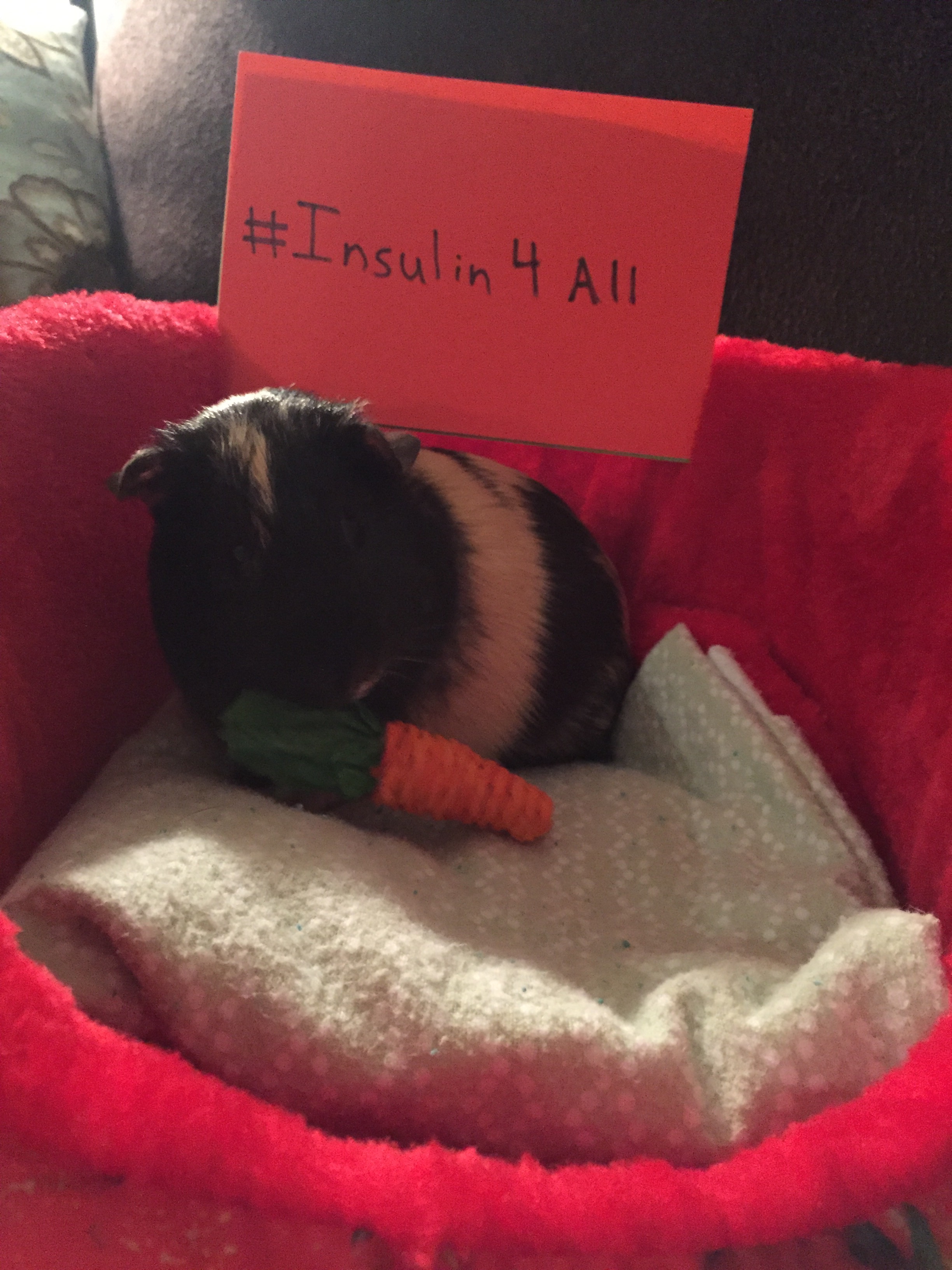
^ The happy face of a creature who has easy access to empathetic care, and her own health information.

Whenever I visit a famous diabetes clinic affiliated with an even-more-famous Ivy League university medical center, the norm has become that it takes approximately six weeks to receive my lab results after the appointment.  While I have bemoaned this publicly on Twitter, I do not do so simply to hear myself talk.  This is not a unique situation to my healthcare experience, this clinic, nor other humans in the American healthcare system.  The plague runs rampant.  But is there really any excuse for it to keep spreading?

I am of the opinion that if said clinic’s nurse has poked the vein in my arm to draw blood, if I have lost my dignity by peeing in a cup and then holding it up to the light to squint– praying that somehow whatever is in that cup will be as okay as healthy-looking-urine can be!–, then I have earned the right to access my own medical information in a timely, effective fashion.  It is my data.  Who, what, when, where, why, and how I share it should be up to me, in an ideal world.

When said clinic advertises its new and improved EHR for years, only to continue solely updating occasional appointment reminders while the highly-acclaimed EHR remains devoid of labs and notes, something’s gotta give.  If this is happening in the “Mecca of healthcare,” where the biggest and the best EHR companies and universities spread their wings, how on earth can we expect the continuum of care and the quality that we know we are capable of achieving to improve healthcare?

This is not anyone’s fault in particular.  We have a healthcare system that remains convoluted and disjointed, no matter which political party attempts to restructure it.  We must ensure the utmost privacy while simultaneously allowing data to be useful and accessible- not an easy feat by any means, especially with hundreds of entities vying for this business.

My healthcare provider’s ultimate responsibility is to care for her patients.  If we are asking her to become an IT wizard on the side, we are asking her to make sacrifices elsewhere; ultimately, those sacrifices will come in the form of time lost treating patients with a high-quality level of care, which is contrary to what any good doctor stands for.

On the administrative side, more training needs to occur to ensure a smooth transition of care and patient data.  There will always be bumps in the technological road, but we cannot overlook commonsense.  For example, when a patient has blood drawn, either mail the labs shortly thereafter (in and of itself an archaic method of communication considering privacy and efficiency), or, use the #$%^*&@ patient portal to the best of its ability- to provide patients with the information they need to be informed and engaged in their health condition management.  Contrary to what the insurance industry may imply, we cannot scapegoat outcomes on patients and providers since we only provide rusty tools in their toolboxes.

“THESE ARE MY KIDNEYS!  I want to know- good or bad!” I dramatically proclaimed to my doctor when I finally got fed up enough to send an email requesting overdue lab results, circumventing the clinic and going directly to a source who cares enough to help. (Everything is fine, but it’s the principle of the matter.  If things were not fine, we want to proactively take action as soon as possible.  Lab results that are MIA for 6 weeks are a missed opportunity to intervene, and if we add up the totality of those missed opportunities and multiply it by the totality of the patients affected and the totality of the healthcare providers and admin. executives unnecessarily getting burnt out because we make this process unnecessarily harder than it was ever intended to be, well, you get the picture!!!)

My doctor answered my email pleas late at night on her day off, showing me she wants to make this situation with the clinic better for her patients.  She gets it, agreeing wholeheartedly that we need quick access to my health information in order to form the best game plan for treatment.  Much like Reese’s Vet, she listened and allowed me to express everything that I needed to.

The only way things are going to get better is if we continue to voice these issues and work together.  I believe strongly that clinics should hire firsthand patient consultants to come in and advise.  They offer expertise that cannot be seen without the lived experience, and their hearts are in the right place to make improvements for everyone who will come after them.  Many have professional and graduate level education experience in the healthcare field, further enhancing their value to this discussion.

Such constructive feedback can be a path that makes all healthcare players happy.  Costs may decline, quality may increase, outcomes may be better, human beings may spend more time living and less time surviving– and all from simple tweaks that do not require much investment aside from simply listening to those who are fighting for their health every day, and being open to changing accordingly.

Hey, humans!  Let’s get on the same wavelength as veterinary care, in which we hone in on empathy, communication, topnotch organization in our administrative duties, and a healthcare team that works together with living, breathing creatures of all backgrounds.  So, what do you say?

img_2712


Medusa


I don’t really like this picture

the Medusa hair

the empty, searching eyes

behind the mask of a smile.


“Emotional support” animals exist

because “emotional support” humans

sometimes falter

with their words.

That unspoken empathy

sometimes best fulfilled

by a creature

weighing less

than two pounds.

 
“Can you bring me my baby?”

I’d asked my mother

“Birthday cake

wasn’t sugar free

after all”

I’d sighed.


Unfairly pushing the blame

of an insidious condition

onto another

in the exact ignorant manner

I have grown to detest

in the abundantly phony

“Tame Your Diabetes!” articles.

 
My vision blurry

I already knew the number

was 400+ and climbing

without having to look

at the faded screen

of an overused machine

supposedly meant to sustain life

while the cure lingers

just out of reach.

 
“Can you bring me my baby?”


No Rules Poetry

Rx straddles the ledge

Rx straddles the ledge

of the countertop

His hand shakes as he reaches

Rx drops

He screams

as the glass splinters

all over the floor

and into his foot

the droplets of life

now mingled in with the dirt

from inside and out

holes punched in the wall

of the kitchen

where he can no longer feed

without those tiny droplets.

What good is the dirt?


For a life that is so fragile

soft and precarious

so dependent on these molecules

and conversations

and circumstances,

it sure as heck

feels weathered

and hard.


img_3963


No Rules Poetry

What would have been?

Wonder

What would have been?

if the right provider

had asked the right questions

and I’d replied honestly

all those years ago.

 
“Why is your blood sugar chaotic?”

“Because life is chaotic…”

Firm, and to the point

the question and the answer.

And the response?

 
Or if the nurse /

who connected me to the doctor /

who helps me to stay afloat now /

had been my nurse then /

and she’d been my doctor.


What would have been

What is

What will be

Still swimming


No Rules Poetry

Docto Interview

Many thanks to Docto for our fun interview, which can be found here.  I enjoyed learning more about the Docto app, which uses algorithms to predict blood glucose levels an hour in advance (docto.me)!  I believe there is great potential with this app not only in terms of physical health outcomes, but also in easing the emotional concerns that go hand-in-hand with diabetes.

Having detailed knowledge as to where my blood sugar might be headed an hour from now would allow me to make more informed insulin dosing decisions.  It would also mitigate my anxiety in that the unknown, sometimes-scary diabetes stuff will become known before it even happens.  Docto literally makes the unpredictable more predictable, which is music to my ears from a holistic diabetes management perspective.

Docto did not ask me to write this blog post, but I want to say it:  I am impressed with Docto’s dedication to making diabetes management better for our community, as well as their genuine interest in learning more about the diabetes experience from those who live it firsthand.  Our interview renewed my hope that the diabetes burden will become lighter for all of us in the future thanks to healthcare innovation and teams like Docto.  I encourage readers to visit docto.me to learn more.

April Showers Bring…

Writer’s block.

I’m currently reading four books at once and composing just as many blog posts in my head.  My golden rule of blogging is when the words flow, ride that wave.  But if writing ever feels forced, it is time to take a step back and regroup.

Owning the occasional frustrations of the writing process can be just as important as what is eventually said.  The right words will come along.  They always do.  Isn’t that why God created coffee?!

Here’s a photo of a cute Guinea pig to tide us over until May.

Ah-Ha!

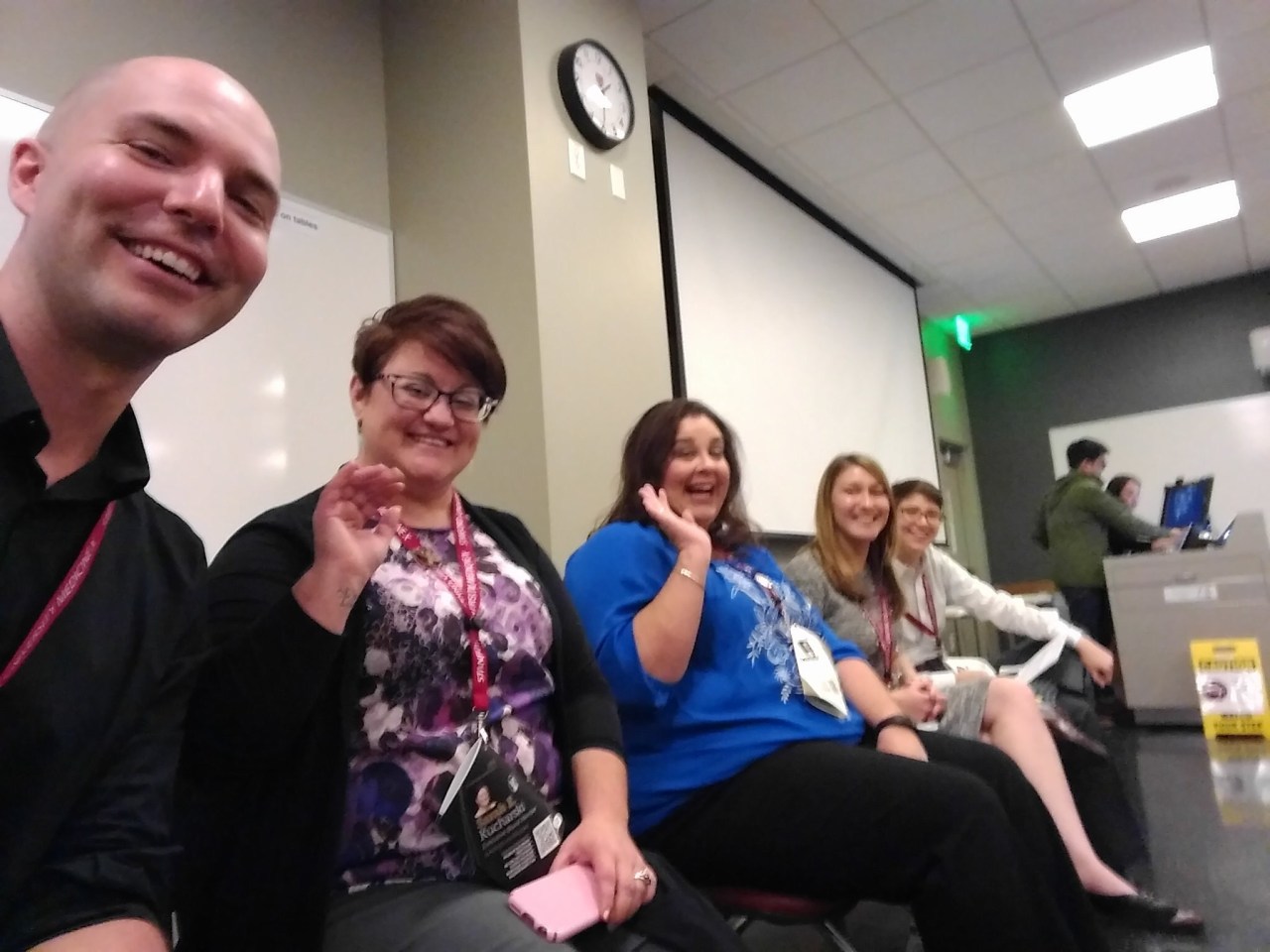
Video of our 2016 Stanford Medicine X panel, Ah-Ha! moments in mental health and chronic disease management, can be viewed here.  The panel speaks for itself; it was brave to participate; it was brave to be a member of the live audience- at Stanford and/or online; it is brave to watch the video; it is brave to reflect on mental health and chronic disease management.

Many thanks to Charlie, Danielle, Sarah, Mark, and so many others in the MedX family for making our 2016 panel such an empowering and enlightening experience for so many.

img_7279

Photo credit: Stanford MedX Flickr


Featured image photo credit: Mark Freeman

Coffee Date # 3: Lilly Diabetes Takes The Mic

Julie Herrick Williams, Communications Manager at Lilly Diabetes, joins VLNS as the third Coffee Dates guest.  When I requested diabetes industry/pharmaceutical entities to discuss insulin here, two people rose to the occasion- to my pleasant surprise.  Thank you to Mike Hoskins for encouraging this interview, and to Julie and Lilly Diabetes for your candid participation.  Without further ado, let’s pass the mic to Julie.


A:  Insulin access and affordability are currently hot topics in mainstream media coverage, as well as diabetes social media conversations. Manufacturing, research and development (R&D), and marketing in pharmaceuticals are all complex. Can you explain how these -or other- factors tie into the pricing of Lilly Diabetes’ insulin?

J:  Many factors go into the list price of Lilly insulin, and that’s true for all of our medicines. Developing and manufacturing insulin actually is very expensive and scientifically precise, so only a few companies invest in it. Billions of dollars in costs (from R&D to technology to capital) and expert scientific and technical know-how are required. Lilly has built state-of-the-art insulin manufacturing facilities around the globe—and, in 2013, we decided to invest another $1 billion to ensure our facilities efficiently meet increasing needs for insulin as the prevalence of diabetes grows. We’re committed to meeting patients’ needs with the highest standards for quality and safety—and to addressing affordability issues for people taking insulin.


A:  Insurance plans and pharmacy benefit managers (PBMs) also impact what the consumer pays for insulin. Lilly recently coordinated with Blink Health to make insulin more affordable and accessible for some people with diabetes. Please tell us how this program works and who may be eligible. 

J:  We’re working hard to address concerns about the cost of insulin. On January 1, 2017, Lilly introduced a new insulin discount program. In partnership with Express Scripts and using Blink Health platforms, we’re offering a discount of up to 40 percent off most Lilly insulins for people who pay full retail price at the pharmacy (those without insurance or in high-deductible health plans). For more details, see blinkhealth.com and the attached patient brochure.  Since this is a discount program, not insurance, people should check their insurance before making a purchase through Blink Health.


Source: Lilly Diabetes


A:  I inquired of a fellow healthcare advocate which question she would ask if given the opportunity to have you answer it here. Her reply: “My main question: ‘Why?’.” [To paraphrase: Putting aside the R&D or insurance influences for a moment, why raise the price on a product that keeps us alive by hundreds of percentages over time?]

J:  It’s important to note that the price people pay at the pharmacy is the result of many different factors, most notably their insurance benefit design. While list prices for insulin have gone up, Lilly’s average net realized price for Humalog (the amount we receive after rebates and fees are paid) has been flat since 2009. A big reason is that we pay rebates and fees to PBMs and health plans to keep our insulins available on formularies. Unfortunately, people with high-deductible insurance plans do not benefit from these rebates; instead, at the pharmacy, they’re forced to pay list price, or “sticker price.” We’re working with others across the healthcare system to ensure that insulin is affordable for all who need it; our discount program is just the first step.


A:  What about the healthcare advocates who will say that more can be done, that perhaps we should not need a discount program to begin with if insulin could be more reasonably priced from the get-go? Are there any ideas in the pipeline to make this more of a reality?

J:   While our offer of discounted insulins through the Blink Health platform was an important first step, we know that we must do more. We need a broad-based, long-term solution. Through conversations with stakeholders—from payers and employers to patients and advocates—we’re seeking a multi-pronged approach where we assess and improve health insurance design, out-of-pocket costs, rebate streams and transparency in drug pricing. We want to be part of the solution—to improve care, increase efficiencies, and lower costs.


A:  Previous Coffee Dates have discussed what the term ‘transparency’ embodies for those who rely on insulin to live. What does transparency mean from the Pharma perspective? What improvements can be made to ensure all sides of the healthcare equation are well-informed and able to access resources for optimal health?

 J:  Over our 140–year history, Lilly has strived to enhance the public trust of our company and industry by being forthright and ethical in the conduct of our business. For instance, we believe our process of openly reporting financial interactions with healthcare providers builds trust and confidence with those providers, as well as with patients and caregivers. Yet, we realize more can be done to respond to society’s fast-changing expectations, so we are constantly working to improve. (By the way, participating in this blog chat is just one way that we like to be transparent!).


A:  Will biologics and biosimilars help to drive down insulin costs in the future? What are the options if the element of consumer choice in treatment is affected by insurance coverage of certain products?

 J:  The launch of Basaglar in 2016 as the first follow-on insulin did, indeed, introduce additional competition into the basal insulin marketplace. Fortunately, that should reduce some healthcare costs. But most of those healthcare savings are realized on the net cost level to PBMs, health plans and others. What a person pays for insulin at the pharmacy is the result of many factors—most notably, their insurance benefit design.

While we are strong advocates for treatment choice, we recognize that healthcare providers and insurance plans ultimately select the treatment options for people. Consumers will need to talk to individual insurance companies or pharmacy benefit managers about their list of covered medicines.


A:  Does Lilly have charitable programs for those who need insulin outside of the U.S.? Where can readers go to learn more about these options?

 J:  Yes, we are deeply committed to the International Diabetes Federation’s ‘Life for a Child’ program in developing countries. The program provides insulin and syringes, blood glucose monitoring equipment, clinical care, HbA1c testing, diabetes education, and technical support for health professionals. Over the past decade, Lilly has donated more than 1 million vials of insulin through this program, helping thousands of children access the care they need. To learn more about ‘Life for a Child,’ email lifeforachild@idf.org or click here: http://www.idf.org/lifeforachild/contact. And, the Lilly Cares Foundation’s Patient Assistance Program provides medicines at no cost to qualifying U.S. patients. To learn more, please go to www.lillycares.com.


A:  Finally, inquiring minds want to know: What is Ryan Reed’s lucky coffee order on race day?

J:  It’s pretty simple: he likes regular coffee – black!


We Interrupt This Program…

For a special message:


Pharma and industry folks, we invite you to discuss your thoughts on insulin in an upcoming Coffee Dates interview.  Here is your chance to share your point of view.  If interested, please contact me.  

To read more Coffee Dates regarding insulin, please see here and here.