Your Grandma’s Diabetes Vignette

“My grandmother died of diabetes,” my ‘boyfriend,’ Jake, mentioned offhandedly as we climbed rocks in the woods behind his home.

We were in fifth grade, and the act of dating consisted of parentally-supervised playdates a few times each month and the added privilege of swapping prince and princess Disney-themed Valentine’s Day cards in February.

“No she didn’t,” I retorted.

“Yes she did.  She got really sick.  I don’t think she had to take shots like you.  But the doctors said she died of diabetes.”

“People don’t die from diabetes.  It must have been something else,” I replied, shaking my head as if to dispel the prospect.

The thought had never really crossed my mind before.  I knew low blood sugar left me pale and shaking on the floor.  But did people actually die from this stuff?  I pushed the notion to the anxiety cupboard of my mind, a place from which I often plucked a topic to pester my mother about on the car rides home from school.

“Do people die of diabetes, Mom?”

“I don’t think that’s something you have to worry about,” was along the lines of her response- a well-played verse which straddled the line of truth just enough to shield me from the painful reality of the answer.

I packed the concept of death via diabetes back into the anxiety cupboard of my mind and closed the door tightly.  Why had he said it if it wasn’t true, though? 

Today I realize that Jake simply wanted his grandmother’s story to be heard, especially by someone who understood firsthand the turmoil of the disease that took his grandma away from Christmas mornings with her grandchildren far too soon.

If I ever walked into a bar now and happened to find Jake swigging from a frosty mug, I’d tap him on the shoulder and tell him that his grandma’s diabetes is different from my diabetes, which is different from your diabetes, which is different from Ryan Reed’s diabetes.

Then I would buy him a beer, apologize for his loss, and sit down and listen to his story.

After #MedX: The Big and The Little

A few weeks before attending Stanford Medicine X (#MedX) 2015, I wrote down my thoughts about life in the “Before #MedX” stage.  I knew that this experience would be life-changing, inspiring, and empowering, but if I multiplied those factors by a billion, I still would have underestimated just how powerful the #MedX experience was for those of us who were so blessed to be there.

We talk and tweet a lot about the big moments at #MedX: when Cyrena Gawuga brought the crowd to our feet during her Ignite! talk, which chronicled her personal growth in the face of what previously seemed like a failure; when Abby Norman carried us through the whole spectrum of feelings- from hysterical laughter at her wit and humor to blinking back tears in awe of her journey to get properly-diagnosed with endometriosis and appendicitis; when Julie Flygare illustrated that anything is possible despite narcolepsy; when we marveled at the strength and determination of Emily Kramer-Golinkoff, who is improving the lives of those with cystic fibrosis as they race against time (side note: I was totally “fangirling!”); or when Ben Bahan taught us that he can communicate and listen (and do so with a sense of humor that rivals Amy Schumer’s!) despite being deaf.

MedX stage

All of those moments were just- Wow.  My fingers couldn’t tweet the powerful one-liners fast enough.  Every sentence spoken was just that darn spellbinding.

As much as #MedX completely renews your sense of purpose and advocacy with the big headliner stories, it also reinforces those concepts in the little, behind-the-scenes moments.

I received support from #MedX before I even stepped foot on the Stanford campus.  When a good friend’s child was diagnosed with a serious condition recently, I sought advice on what to say and what not to say (from a 2015 ePatient who I will not name here to respect my friend’s privacy; ePatient, you know who you are- thank you).  The #MedX advisory board and administrative staff made sure that all of the i’s were dotted and the t’s were crossed to ensure a pleasant experience for conference attendees.  #MedX alums were always available to yield my rookie questions at all hours of the night.  At the ePatient dinner, our hearts overflowed with compassion and respect for one another.  The list of human goodwill goes on and on when it comes to Medicine X.

From a diabetic online community (#doc) standpoint, I enjoyed talking about the highs and the lows with Chris Snider, Amy Tenderich of Diabetes Mine, Sophie Thacher, Meredith Hurston, and Dana Lewis- who carried her (artificial) pancreas in her purse, which automatically ranks her pretty darn high in my book of praise!  It was refreshing for me to be around people who understood without me having to really say anything, who could swap campfire tales of funny diabetes moments, and who were so passionate about our #doc advocacy endeavors.

The #MedX workshops were particularly informative and interactive.  Dr. Bonnie Feldman enthralled us with her autoimmune disease research, and we pledged to keep in touch and work hard to crack the autoimmune code as a community.  My good friend and fellow ePatient, Danielle Edges, held a workshop on eHealth in pediatrics, which featured her family’s brave story of caring for a daughter with a congenital heart defect called heterotaxy and another daughter who is secondarily impacted by having a sibling with a chronic condition.  It was so uplifting to witness this Mom, who would go to the ends of the earth to help her family, whose humor remained intact in the face of challenging circumstances, and whose loyalty and friendship is beyond measure.

#MedX is renowned for bringing together the various participants in the realm of healthcare.  We hear the term “Big Pharma” thrown around quite often online.  But I can assure you that the pharmaceutical representation at #MedX was laser-focused on getting the little details right and connecting with the patients whom they serve.  I was asked, “What can we do for you?  What message do you want us to hear from your patient perspective?”  I was so humbled by their willingness to listen and their desire to drive innovation.

There were also the little moments at the Sheraton pool, where ePatients and other #MedX attendees dined after the day of conference events concluded.  Nisha Pradhan’s passions for advancing anosmia research and providing an empathetic medical experience were contagious.  Britta Bloomquist taught me about life in northern Minnesota and juggling Lyme disease and ankylosing spondylitis.  Kristin Coppens was an example of grace and determination while managing multiple chronic conditions.

Natalie Abbott and her service dog, Cassius, educated us on Moebius syndrome, a rare disease only diagnosed in 1,000 patients thus far.  Natalie and Cassius were the epitome of a good team; they worked together seamlessly, never complaining.  I gained perspective that I must admit I very much needed by watching Natalie and Cassius together: Moebius syndrome is a passenger along for the ride in Natalie’s very-accomplished life, not the other way around.  We can apply that same lesson to every sort of adversity in life.  Thank you for inspiring me so much, Natalie and Cassius!

There are so many other big and little moments from #MedX which I would love to highlight, but the truth is that I could write a novella about how great each individual who attended is.  I would like those reading this blog to know that #MedX is a phenomenal experience because of the positive, enthusiastic, dare-to-dream-big nature of its attendees.  We are without a doubt going to change healthcare for the better.  Heck, we already have, and we’re just getting started.

The best way to summarize what #MedX means to me is to leave you with a story.  (We really like stories at #MedX!):

I woke up having some concerning diabetes issues on the first day of my #MedX experience, the pre-conference Healthcare Innovation Summit event.  To be honest, I felt quite ill.  My mother convinced me to take the shuttle to the conference location.  There would be plenty of healthcare geniuses around if I needed assistance, she advised.  How very, very true.

As the day went on and I took many insulin injections, my diabetes situation began to improve.  The group disbanded for an afternoon coffee break, and I walked to a bench in the shade of the Stanford campus.  Eventually, a professionally-clad woman sat down on the neighboring bench.

“This shade is so welcome,” she noted.

“Absolutely, and it’s nice and quiet here- a good opportunity to take a breather,” I replied.

And so we chatted.  She was at #MedX representing her healthcare company’s new technological product.  Her excitement for the tech’s potential to improve lives was palpable, and it was clear she loved her work.

“Can you explain to me what an ePatient is?” she asked.

“We’re all here to advocate for our respective causes.  We believe wholeheartedly in improving healthcare, in humanizing the story.”

“Is diabetes… hard?  As in, does it impact you a lot?” she asked tentatively.

“Sometimes…,” I admitted.  “We fight hard for our health every day.  But we believe in a brighter future.  Isn’t that why we’re all here to begin with?”

And with that we walked back towards the conference hall, two people on different sides of the healthcare equation, united by a common ambition to help others.

That’s what #MedX is all about.  It was my greatest honor to attend this year, and I would like to sincerely thank everyone at Medicine X for sharing their perspectives.  Keep doing big (and meaningful little) things.

Disclosure: I attended #MedX on a partial scholarship as an ePatient delegate.  Opinions expressed here are strictly my own.

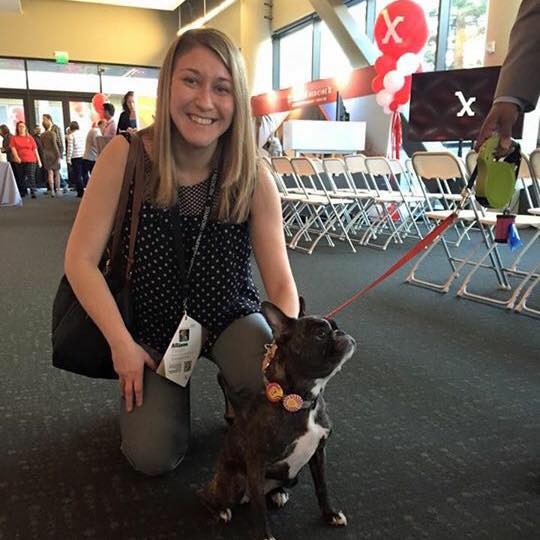
     Zoe Chu                         MedX sign

^ With the world-famous #MedX mascot, Zoe Chu!                ^ Excited for #MedX!

A Few Good Nurses

For a couple of years, I have kept this story close to the vest, mostly because I felt quite vulnerable sharing it.  I still feel sensitive, but the timing is now right to tell the tale.  We are seeing many headlines in the news about nurses today.  As far as diabetes blog headlines go, I hope you’ll take a few moments to read this one and to thank a deserving nurse.

Winter.  I had recently started grad school and I was optimistically trying to do #AllOfTheThings.  This included a regular, intensive gym schedule, a disciplined diet, and very little sleep- just the right ratio of “healthy” ingredients to convince myself that I was not running on vapors in reality.

I booked an appointment with my diabetes nurse, as I was experiencing more frequent insulin pump site problems.  We needed to find viable locations for site changes, or perhaps to discover a different type of infusion set that worked better for my body type.  Also attending the appointment would be a nurse employed by the insulin pump company.

At the appointment, we had all of our diabetes ducks lined up in a row: various infusion set types, reservoirs, alcohol swabs, IV prep, and Humalog vials.

Historically, I stuck to the abdominal area for pump site changes.  We wondered if significant scar tissue had developed, causing the numerous pump site failures.

“Alright, can I take a look at your sites?” D (diabetes) Nurse asked.

“Yeah…” I replied, eyes darting to the floor.  I felt weak as I handed the control of the situation over to the healthcare professionals.  It’s my body, but now I have to trust someone else with it.

D Nurse gently felt around for scar tissue, but did not find much despite my long-term insulin pump usage.  P.S. (pump site) Nurse from the pump company inspected the same areas and came to the same conclusions: no scar tissue, but not much pump site “real estate” to work with.

“Geez, no wonder these sites are hurting you.  You don’t have much padding to use!” P.S. Nurse said, making eye contact with D Nurse as if to communicate, “This might be a difficult appointment…”.

In terms of pump sites, my extra sit-ups after the gym workouts were not helping matters much.  (Now that I am in my last semester of grad school, I assure you that extra sit-ups are a thing of the past!)

“You can try leg, back, or upper butt sites whenever you feel comfortable.  But for today, if you want to continue with the stomach, we can do that,” D Nurse said.

“Okay,” I replied nervously.

We all knew what was coming: the “trial and error” method of identifying infusion sets that would work well for me.  The nurses had to be sure that I was inserting the sets properly and that we were not overlooking a better option.  Like many diabetics, I have endured thousands of needles in my lifetime.  Although unpleasant, at some point you get accustomed to the momentary pokes and prods and you do not dwell on them.  Regardless, even at the age of twenty-five, it was a harrowing thought to know that my stomach would soon be a pincushion.

First, I showed them how I inserted my sets.  The process was automatic and quick.  The nurses agreed that I performed every step correctly and we could cross my name off the list of possible suspects causing the site failures.

“Your skin is tough- literally and figuratively.  I think you may be getting some resistance from the insertion devices, which could be kinking the cannulas as they go into your body.  Can I try an insertion?”  P.S. Nurse asked.

I nodded and allowed her to try without protesting.

“Okay, that was good but I felt the kick-back with the inserter.  What if we manually put the site in?  You could insert the needle by hand, without an insertion device, and perhaps you can curtail the bent cannulas that way,” P.S. Nurse suggested.

Whaaaat?!  I wanted nothing to do with that idea, but was also willing to try anything to get the sites to work better.  I made a feeble attempt at manual insertion and watched as the needle bounced back off my skin.  Defeated, I slumped down in the chair.

“Do you mind if I try it?” P.S. Nurse asked.

I liked how she always sought my permission before attempting anything.  The control was still in my hands to an extent, even though she now held the needle.

“You’re doing so well.  You’re so brave,” D Nurse whispered.  She wiped the dried blood off of my stomach using alcohol swabs, distracting me while P.S. Nurse prepped for the final insertion.

And just like that, it was over.  P.S. Nurse swiftly launched the needle into my side, and I did not feel more than a minor pinch.  We high-fived and hugged afterwards, proud of our hard work.

That appointment lasted a few hours.  While it may not have been as draining as receiving chemotherapy or undergoing heart surgery, I can tell you truthfully that it was an exhausting afternoon for all of us.  Emotions were high in the face of uncertainty, and we had to trust and communicate with one another.  If it hurt, the nurses were right there to make it hurt less.  Likewise, I had to admit when it did hurt, when I did need their help.

In my lifetime of medical appointments, I have felt the cold stainless steel of stethoscopes from nurses and doctors alike.  I can attest to the other tools that nurses use: infusion set needles, alcohol swabs, bandages, medical tape, bear hugs, TLC.  A few good nurses can change the entire course of an appointment, making it go from “scary” to “It’s going to be okay” as they work steadfastly to heal their patients.  Nurses often handle the difficult moments behind the scenes, with little fanfare.  They comfort patients like me when we are scared.  They make it hurt less.  And they deserve to hear “thank you” more often in our society.

One Year Later: Thank You

One year ago, on September 6, 2014, I was a shadow of the person who I am today. I was gaunt, hungry, and insulin-deprived, the result of months of insulin pump product defects and subsequent health problems due to medication delivery malfunctions. Alone and desperate for answers, I decided to start a diabetes blog from my tiny apartment in Rhode Island. Very Light, No Sugar was created, and technical insulin pump support, as well as general diabetes support, was sought. I thought that I was looking for biomedical engineering answers, but it turns out that I was really looking for something more powerful: empathy and understanding. The diabetic online community (#doc) rose to the occasion.

I distinctly remember, years earlier, sitting at my desk overlooking a soccer field during my junior year of college. I Googled “diabetes blog,” and clicked on sixuntilme.com. Wow, can she write!, I thought, as I nodded my head along with the words that I read and laughed at Kerri’s signature humor. At the time, blogging seemed like something really cool for other people to do, but not for me. I was too busy pretending that diabetes-related anxieties were not affecting my life negatively. What do I really have to say, anyway?

Reflecting on the past year, right now I want to speak to those who think similarly to how I did in college. Trust me here; you do have something to say and something to write. Go for it. The #doc is generally supportive and uplifting, and each member offers a unique perspective peppered with the common bond of diabetes, whether as those with T1D, T2D, LADA, MODY, cystic fibrosis-related diabetes (CFRD), or as friends/family/caregivers. We all “get it.” Your perspective is part of the larger fabric of diabetes which connects us all. Isn’t that voice worth sharing, then?

When I started Very Light, No Sugar, I was the epitome of the dorky new kid on the playground. I tweeted and retweeted and never stopped virtually talking. Even today, live-tweeting my emotions could land me on TLC’s My Strange Addiction. [Insert “thumbs up” emoji].

Back in September of 2014, some criticisms labeled the #doc as too “exclusive.” I had only been in the #doc for a few days or so, but my first impressions of its friendliness meter were positive. So, I threw myself into a Twitter conversation amongst many “#doc pioneers” (i.e. the “big names with big hearts” whom we all love- no need to name-drop here) regarding how to make everyone feel welcome.

Much to their credit, the #doc pioneers did not bite at a newbie who had very little perspective to offer at the time.  To be honest, I did not really belong in that conversation. But they entertained my rookie thoughts, which went something like, “THE #DOC IS GREAT. EVERYONE IS COOL. BE FRIENDS WITH ME!!!” (I’m blushing as I write this). My point here is that when you start a blog, you cannot possibly be as nerdy as I was, and the #doc embraced me. Sooo, again- go for it!

My largest piece of blogging advice would be to foster genuine connections, which begins with being your authentic self. If others take the time to comment on your blog or to tweet at you, write back! Understandably, there are some #doc superstars who get inundated with messages; it is unfair to expect that they can respond to every single one. But for me as a “humble beginner” blogger, I had a lot of time on my hands. So I took an extra few minutes to engage with my audience, and I now consider many of those who I interacted with to be my friends. Also, dive into weekly chats like #DSMA and #DCDE for helpful advice and comradery.

Find your balance. Share as much or as little as you choose, but know that if you open your heart to the #doc, they give great big bear hugs of support. I will forever be indebted to Laddie and Cherise for sharing my Broken Record blog post about my insulin pump issues. The response was more than I ever could have garnered on my own, and it helped me to make the difficult decision to try insulin injections again. (In particular, Caroline’s reassurance that it would be okay sticks out in my mind; thank you.)

While I still have room for improvement in my diabetes management, I can say that I have grown into an emotionally-stronger person through this experience.  I have also learned that each person’s diabetes management choice is a very personal one; do what works for you.  We have plenty of options, and nothing has to be permanent.

Although we are unique individuals, we make up a larger whole- a powerful, inspirational, worldwide community.  At the time of publication of this post, my blog has been viewed in 58 countries, from here in the United States to Madagascar to Afghanistan, and many more globetrotting locations. That fact, in and of itself, has made me a better person. I am no longer desperate and alone. People from all over the world understand and support the same fight against diabetes.  All I can say is, “Wow!”  Although I wish that this disease did not touch so many of us on an international level, it is humbling to know that we are all in this together.

Thank you for hearing me out on the good days and the bad days, and thank you for allowing me to do the same with you. Thank you to those who email or message regularly with me (you know who you are); I cherish the wisdom, strength, and support found in our virtual Pen Pal notes. Thank you to those in the Boston area who came together for our inaugural #BetesOnTap meet-up, which offered social support for diabetics and filled a void in my heart that I had not quite acknowledged before.

I write often about electronic forms of communication, but- with her permission obtained beforehand- I want to note that my first old-fashioned mail came from Hope Duncan in New Zealand (NZ). I admire Hope so much for the wonderful example she sets for youth with diabetes. She is also one of the most talented artists out there, and I encourage you to check out her creations on social media.

Hope’s gift still sits atop my fireplace mantle, a spot reserved for cherished items. Her card explained the gift’s background, stating, “Well, it’s a marae, a little piece of NZ for you in the States. 🙂 The native people in NZ are called Māori and their meeting places are called marae (said like ma-rye)… I hope you can fit it all together. I taped the pieces where they should go, so hopefully that helps.”

Hope marae pic

The marae model (pictured above, along with Hope’s card) represents the #doc to me: a meeting place that feels like home, where all of the puzzle pieces fit together as part of the larger story of community.

One year later, I still want a cure for diabetes to help our community, our marae. I still hope and dream and pray for it every day.

One year later, I am motivated to achieve better health and to try new approaches if needed. Through the #doc, I have a safety net of support to catch me if I fall or to cheer with me when I succeed.  Likewise, I hope that in my own way, I have given the same support back to some of you.

One year later, I look forward to fostering new friendships and learning more in the online world of healthcare interactions, particularly with Stanford Medicine X (#MedX) coming up shortly.

One year later, I still drink very light, no sugar coffee, and one year later, I still lift my coffee mug to all of you.

Thank you, #doc- for everything. Thank you for who you are and for what you do, for advocating long and hard, for listening, for talking, and for caring. You inspire me every day, and I feel so blessed to consider you my friends and diabetes family. Cheers to many more years together!

Love always,

Ally

The Balancing Act

IMG_0283

This blog post appears as part of Diabetes Daily’s Diabetes Social Media Burnout Day.

Much like diabetes is a balancing act between the highs, the lows, and everything in-between, so, too, is social media advocacy.

I find myself pulled between extremes: excited when having a great day, frustrated when things go awry. How much should one vocalize these feelings? It is no secret that I wear my emotions on my sleeve, especially on Twitter. But I always hope to lift others up by being transparent with my diabetes experience, rather than to tear down anyone’s mood by being too-transparent in a Negative Nancy moment. Again, life is a balancing act.

On the one hand, I am so proud and thankful to be a part of the diabetic online community (#doc). I want to scream it from the rafters so that my non-#doc world knows how great it is. But on the other hand, I love my #doc cocoon just the way it is: bursting at the seams with people who “get it,” devoid of judgment from those who do not “get it.”

The #doc may have differing opinions on various topics (Should we inhale insulin, or inject it, or pump it, or pray harder for a cure?!!!), but at the end of the day, we all understand without needing to say much. We know how tiring it can be when the CGM line continues to drop down no matter how many juice boxes are guzzled. The non-#doc sphere requires some introductory, explanatory information in these, and similar, circumstances.

For example, there is a large difference in screaming, “I’m high!” to my diabetic relative, versus yelling the same phrase at a baseball game and receiving some weird looks in response. I can Instagram a picture of an empty Juicy Juice box on my nightstand, and the #doc immediately understands. Whereas I may need to explain to my non-diabetic friends why overnight hypoglycemic episodes can be dangerous. Most of the time, I enjoy educating others about diabetes. But especially during times of burnout, I simply want to get on with my day and push diabetes aside.

There is a weird juxtaposition of advocating outside of #doc territory.  I often want society to respect diabetes for the jerk that it is, so I may post a picture of a CGM graph showing 55 mg/dL with a slanted down arrow.  As in, “Wow, I survived that sh*t!  Heck, yes!”  The media does not always portray just how strong we are.  We deal with life-threatening lows and highs, and we start over the next day.  Some of us have not been so lucky, and we mourn their losses and raise awareness for their stories.

Yet these measures of advocacy often draw out the questions that make my skin crawl.  “Is your diabetes still bad?”  You’re missing the point.  Diabetes is an enormous Swear Word, a complex beast that we do our best to tame.  If I’m talking about diabetes often (I am), it is because I want you to hear my story and to respect it.  The non-#doc Wilford Brimley anecdotes provided in response often add to the feelings of burnout.  Social media is overwhelming sometimes, and I can be my own worst enemy when in a cranky high blood sugar-induced mood.

Diabetes isn’t Burger King, and we can’t always have it our way. I cannot simultaneously expect the non-#doc world to understand more about my personal life with diabetes if I do not let them peek inside my #doc cocoon sometimes. They know Ally already, but do they know that I take my coffee very light, no sugar? Some do, and some do not. In order for me to be a better advocate, I do not have to tell every detail to everyone. But I may choose to explain that I am grumpy due to high blood sugar or why I believe so wholeheartedly in finding a cure for diabetes. Achieving that balance of what to share and when to back away from over-sharing can be a difficult tightrope to walk in the heat of one’s emotions.

Generally, I find the #doc to be a very supportive environment, willing to listen to each person’s shared, yet unique, experience with diabetes. If I ever feel stressed out about blogging, then it is simply not the right time to be blogging. It is a purposeful hobby which I enjoy greatly, and I never want it to feel forced.

As for “diabullies,” or internet trolls, or cinnamon-cure-enthusiasts, I have been tangled up in a few instances where no matter what I said, the hole seemed to get dug deeper with them. My intentions here will always be good, and I believe that we should all be able to respectfully agree to disagree if we choose to do so. If a person hiding behind a keyboard is especially cruel, I try to remember that said person is hurting. Bullies target others to distract from their own pain. It does not make it right, but we are all human and we all make mistakes. We should hope that internet bullies one day find the type of love and support that we have within the #doc.

So there you have it: the diabetes blogosphere balancing act. Am I high? Am I low? Am I happy? Am I sad? Should I advocate harder? Should I let others into the #doc cocoon? Is that a friend? Is that a bully? Do we all experience our own versions of diabetes, whether as T1D, T2D, LADA, MODY, CFRD, caregiver, friend, family member? Aren’t we all in this together? And aren’t we all in it for the right reasons?

I believe that we are indeed here for the right reasons, and we share our stories as they unfold.  If you need to take a #doc break because you are genuinely burnt out, then by all means, go on hiatus in the spirit of maintaining authenticity. That, in and of itself, can be a valuable aspect of your own diabetes story. 

“Uh-huh.”

When I adopt my future child (see here), the phrase “uh-huh” will probably be worthy of a “Swear Jar” donation according to Ally’s Little Book of Rules.  (All proceeds will go directly to diabetes research- let’s chill out, please!)

“Uh-huh” offends me not because of what it says, but because of what it does not say.  It is an empty phrase which does not even pretend to hide its indifference.

I will be the first to admit that I tend to get overly excited about nerdy diabetes-related things.  I follow diabetes stocks and press releases on my cell phone, enthusiastically peruse the blogosphere, keep up with DiaTribe and DiabetesMine articles, and look for every opportunity to discuss the information I devour.  I have pledged to my doctors on many occasions that I will take a break from healthcare information overload, but it proves to be a difficult task when fighting for your health every day.  Diabetes and healthcare are interests which are inextricably intertwined with my very existence.  They are not the totality of who I am as a person, but they are passions of mine with very stubborn “off” switches.

However, diabetes and healthcare are not everyone else’s passions.  So when I am rambling on and on at happy hour about the latest blood glucose meter technology or that one time I ate the entire carton of ice cream during a nighttime hypoglycemic episode, I need to take a step back and realize that others may not be quite as into this stuff as I am.  Fair enough.  If I could be cured of diabetes tomorrow, I would jump at the chance.  Although I suspect that my interests in diabetes and healthcare may not subside once I am cured, I would not mind finding a new, less serious interest to take up some of my time.  Badminton, anyone?

“Uh-huh” is suitable if I am boring you at the bar with a story that you do not really care about.  “Uh-huh” is not acceptable if I am talking about something deeply emotional that affects my health.  Dexcom software upgrades are one thing, but my personal health triumphs and tribulations are quite another.  If I am describing a diabetes incident that spooked me or a frustrating few days of persistently high blood sugars, I am opening up to you because I want you to hear me.  I trust you.  I want you to value what I am saying as important, to empathize, to not pretend that you know the answers but to simply be there for me nonetheless. 

When you say “uh-huh” on the other end of the phone and change the channel on the television running in the background, what I hear is not “uh-huh.”  Instead, the message conveyed is, “I am sick of this same old story.  Diabetes sucks.  I get it.”  You know what?  It does suck.  And it may continue to suck.  It’s diabetes, and it’s a selfish jerkface.  Sure, I have experienced a rough year of diabetes transitions (insulin pumping to MDI to every emotion felt along the way), but I do not get to “uh-huh” away this disease.  I sure as heck hope that it is not especially difficult every day until there is a cure, but sometimes there are long stretches of time where diabetes is a royal pain in the a$$, whether or not we are talking about Lantus burn at backside injection sites.

We are all human, though, and I caught myself “uh-huh-ing” a friend last week.  My coworkers and I are working from home a majority of the time now, a nice perk for those of us who require multiple cups of coffee before we are properly-functioning each morning.  The downside to working at home is that we do not have one another within walking distance if we need help.  Recently, my friend (let’s call him Jason) called my cell to seek advice on a difficult case.  My blood sugar was a bit rocky in that moment, and I felt the familiar brain fog that accompanies those overtired, rollercoaster health days.

“I’m thinking if we use this regulation, I should be denying this issue,” he said.

“Yeah, but I just emailed you the updated guidance.  We can grant benefits only if that particular symptom is present, which it is here,” I replied, as we went back and forth with medical evidence and legal stipulations to try to make the right decision.

The more we interpreted the guidance on the case, the more I found myself nodding and saying, “right, right, uh-huh” as I clicked through online documents, only half-paying attention to what Jason was trying to tell me at this point.

Frankly, I had made up my mind about what we should do on the case five minutes earlier, and I wanted him to be on the same page.  Eventually, our viewpoints fell somewhere in the middle and we were able to move forward.

The moral of the story is that everybody “uh-huhs” now and then.  At times, I am guilty of what I am critiquing here, too.  So what are we going to do to fix this?

Society often incorrectly relates empathy to having actual experience in the particular situation occurring.  For example, a cancer patient can empathize with another cancer patient, but a person untouched by illness cannot offer any valuable input.  I do not personally believe this.  First off, every person’s cancer or diabetes or death of a parent or any other difficult cross to bear has its own nuances.  We are all different people from different backgrounds with different struggles.  But the common denominator is that we are all human beings.  Because of this, we all know how to empathize.  It does not mean that we have to experience carbon copies of one another’s pain.  Rather, we simply have to offer up messages of support.

Instead of saying “uh-huh” when I describe an aggravating diabetes day, say something like, “I’m sorry.  That sounds so tiring.  Let me know if you need to chat later.”  Please listen.  If I wanted to talk to an empty space, I’d jump rope to the beat of a diabetes jingle or throw a tennis ball against the wall while collecting my thoughts.  But instead, I have chosen to tell you, someone who is so important to me and my diabetes fight.

Acknowledge my pain, but do not feel like you have to magically erase it for me.  Do unto others as you would have them do unto you.  Nowhere in that verse do I hear the phrase “uh-huh.”

I pledge to support you in the same ways that I want to be supported- devoid of “uh-huhs” but generous in understanding.  If I do not know what to say, I will attempt to think twice before muttering an empty rationalization.  “At least it’s not XYZ” belittles the struggle.  Instead, I’ll speak the truth next time: “ABC is very difficult.  Please know that I’m here for you.”  We cannot suddenly cure illness overnight, but we can make a more concerted effort to see each other through tough times.

From now on, let’s walk together, instead of “uh-huh-ing” each other.  Promise? 

Before #MedX

Last year’s Stanford Medicine X (#MedX) took place during the same weekend that I created my diabetes blog, Very Light, No Sugar. I was new to the internet blogosphere in September of 2014, and I spent much of my time that weekend soaking it all in.

This exists?! THIS! These concepts that have been bouncing around in my head for so long have a place and a name and a community?! Perhaps I can be part of it? Everyone seems friendly and cool! YES!!!

These were my initial thoughts as I perused the blogs of the diabetic online community (#doc) and followed the #MedX hashtag as ePatient delegates and other MedX attendees tweeted live from the conference. I later watched videos of the MedX 2014 speeches, read blogs of MedX alums, and visited and re-visited and re-visited some more the 2015 ePatient application portion of the Stanford Medicine X website.

I made the rookie mistake of writing 1,000-word answers to the MedX application instead of providing 1,000-character responses as instructed. Upon discovering this issue, I stripped my answers down to the core of why I felt so passionately about this conference and improving healthcare, and I finally clicked “submit” late one evening. Fast forward to now- about five weeks away from MedX 2015- and I could not be more excited to be an ePatient delegate this year and to share the information absorbed at the conference with all of you.

MedX is so special because it takes the “What if’s?” and does not shy away from them in fear.  Rather, MedX imagines and creates the possibilities.  MedX connects the respective patient, provider, and technology dots of the healthcare equation by putting them all together at the same conference.  They are allowed to work together, to dare to dream big, to share the positives and the negatives of their personal healthcare experiences, and to learn from one another in the process.  Recognizing that healthcare is an ongoing evolution, MedX keeps the conversation going before, during, and after the conference.

Many MedX alums have noted how much their lives were positively-influenced by attending MedX. With the conference just around the corner, I find myself keenly aware that this is the “before” stage for me. I study healthcare, work in it, live it through my experience as a type one diabetic, and have moments of inspiration and frustration along the way. After attending MedX from September 25 through September 27, 2015, I will gain a viewpoint that covers a vast array of healthcare experiences- those of other patients, those of providers, and those of technological gurus and innovators in the healthcare field. This will be the “after” stage. I already know that this opportunity is a blessing beyond what I can imagine right now, and I am so very thankful to get to attend MedX 2015.

I am most excited about learning from different perspectives while at MedX. Although I know a lot about diabetes because I live with it, I recognize that healthcare goes far beyond insulin injections and endocrinology. At MedX, there will be industry leaders discussing breakthroughs in technology, ePatients who have battled brain tumors or acted as caregivers for their loved ones, and providers who put their patients’ best interests first and foremost. Taken together, all of these contexts are a valuable asset to improving healthcare as a whole.

The fellow 2015 ePatient delegates to MedX are a great crew of people, as are the Stanford Medicine X administrative team and advisory board. MedX participants come from diverse backgrounds, encounter different health obstacles, and have unique experiences from which to draw from. Yet we share an unspoken comradery before even having stepped foot on the Stanford campus. We have put ourselves out there online because we believe wholeheartedly in improving healthcare. We advocate for better access to care, more open dialogues amongst all members of the healthcare equation, promising futures for those who endure our respective disease processes, and more. We know the feelings of joy on the good days and pain on the bad days, and we maintain hope that the best is yet to come in the future. MedX provides the perfect environment in which to work hard towards these goals and to be a part of the conversation about improving healthcare.

For more information on Stanford MedX, please visit medicinex.stanford.edu.


Disclaimer: I have received a partial scholarship to attend MedX as a 2015 ePatient delegate. Opinions expressed here are strictly my own.

Adoption

Since I was very young, I’ve always said that I wanted to adopt a child.  Over the years, decisiveness has not exactly been my greatest strength, though.  Should I wear the grey dress, or the multicolored one?, Which school should I attend?, and other life choices have waged epic pros and cons list battles within my mind.  Yet adoption is a topic I have never really wavered on.  I want to do it- when the timing is right.

At this moment in time, it is not right.  I need to finish grad school and make major strides in improving my own health, for starters.  I also just need some time to enjoy what remains of my twenties.  Perhaps (probably?) I will continue with school after I finish my Master’s degree?  Realistically, adoption is many years away.

That does not stop me from occasionally Googling “adoption” and perusing the regulations and the steps of the adoption process, as well as the stories of families made whole by the addition of the adopted child.  I want to make sure that I keep that adoption dream alive somehow, that I one day can give back to another human being in a way that is beyond anything I have ever done before.  And, I imagine, that human being will in turn teach me a thing or two (okay, tons of cool things) along the way.

Years ago I attended an outpatient program focused on fine-tuning diabetes management skills.  The participants spent a week bonding with one another and working through our respective diabetes challenges.  This was prior to my #doc involvement, and it was the first time I felt the void inside me filled with what I had longed for all along: connection with others who understood.

While at dinner one evening, I mentioned my guilt about my mood swings associated with wacky blood sugars.  Was it fair to my family and friends?  Would it be fair to my future children?  I went on to talk about other anxieties.  What if one day my vision were to suffer as a complication of diabetes?

Judy*, one of the program participants and a proud mother, looked me directly in the eye and said, “Honey, you need to have children.  You won’t have time to worry so much about yourself then!”

She meant it both in jest and in seriousness, and that is why I respected her so much.  Judy had a certain aura about her- wise, outgoing, and elegant all in one.  When she spoke, you paid attention.

Many years removed from that moment, I still know that Judy is right.  In order to truly find myself, I have to become selfless.  When the day finally comes to adopt, only then will I fully understand Judy’s advice.

In the meantime, I think it is okay to maintain certain dreams, even if they seem far away.  I daydream about the diabetes cure party often.  I wonder about future graduate programs or job prospects.  There is no harm in dreaming big.

Adoption is definitely at the forefront of my mind because of diabetes.  Additionally, I have a wonderful cousin who was adopted and is such a blessing to have in our family.  Realistically, I am not sure that my diabetes management will ever be consistently safe enough for me to have a healthy pregnancy for myself and my child.  It is not impossible, though.  Perhaps in time things will change.  It does not have to be something permanently erased off my chalkboard of life plans.

I try not to dwell on it, but I admit that not dwelling on it is an easy way out considering I am far away from starting a family for various professional and academic reasons.  There’s that whole marrying a soulmate thing, too.  But I still think that adoption will be a route that I pursue, whether or not I also get married and have biological children at some point.

I do want to highlight that without diabetes, the blessing of adoption may not be something that I would be considering as a serious future endeavor.  If not for diabetes and my cousin’s great example, both myself and my future adopted child could potentially miss out on a wonderful opportunity to be a family together.  When the time comes to adopt, we may not choose each other if diabetes had not chosen me many years ago.

We say it often: Diabetes gives us perspective.  I see that here, especially.  Some of these topics are quite emotional for us.  I must admit that it feels a bit odd to write a blog post about something that I have not yet done; rather this blog is about something that I plan to do many years from now.  But putting it down on paper makes the concept more real.  Maintaining hopes and dreams despite diabetes being a big jerkface is one of our best assets in showing diabetes who the real boss is.  Whatever your future goals may be and however far away they may seem, keep that faith alive somehow.  Often God will surprise you with the right answer or opportunity when you least expect it.

*Name changed for privacy reasons.

Signs

Sometimes God taps you on the shoulder and says, “Pay attention!  I am right here.”


^ A moth-type creature with a cross on its back on the steps of my apartment building.  Google tells me its nickname is “the Jesus moth.”  Aptly so. 

I’ve never seen a Jesus moth until just now, coming home after hours of Boston traffic and feeling sorry for myself despite an otherwise decent day.  

Ironically, I told my doctor that I needed to pray more a few short hours ago…  

“Yup, you do!!!” -God

Time to change my perspective before I miss out on the good stuff. 

Adirondack Chairs in the City

No, it’s not a dramatic Nicholas Sparks novel.  It’s just what happened yesterday.

I’ve been waging an epic battle against the “Hormonal Hell Highs”- that thing that happens for the younger female crowd once a month and is emotionally and physically draining, diabetes aside.  But then diabetes hears the terms “emotionally and physically draining,” and it is all about joining the party.  It’s diabetes.  That’s what it does.  It’s just a fact.

If there were a diabetes Tampax commercial, it would show a bunch of insulin-pump-wearing, happy women prancing around the neighborhood with picture-perfect CGM graphs.  Let’s get with the program here: That isn’t reality for most of us.  Not many things are as frustrating as doing everything you’re supposed to do- checking your blood sugar often, increasing boluses, raising basal rates, trying to keep Grumpysaurus Dex in its lair, and more- and seeing that steady yellow line indicating “high” on the CGM for hours and days on end.  Some months are better than others, and in typical diabetes fashion, what works one month rarely applies to the “hormone play date” of the next month.

For someone who is accustomed to working hard and seeing that hard work pay off in terms of job opportunities, GPA, and other objective measures of “success,” it has been a tough pill to swallow- rather, a painful injection of insulin to take- to make peace with the fact that I am trying my best and those blood sugar numbers, although elevated, are the best that I can do right now.  I am not rolling over and letting the diabetes waves swallow me.  Instead, I am throwing on the insulin life preserver and trying to stay afloat until the hormonal college mixer going on inside of my body quiets down.  It is okay to have those moments of hormone-fueled tears, but I still have to ride the diabetes wave and get back to shore safely.

*****

Yesterday at work, many of us participated in certification testing to measure how well we understand the medical and legal aspects of our job.  It is about as un-fun as it sounds, but it has to be done.  We all filed into the office like nervous teenagers before the SATs, coffees freshly brewed and pencils newly-sharpened.  The test was divided into morning and afternoon sessions.  After finishing the first half of the test, we had an extended lunch break with a heavy emphasis on coffee-refueling at the local shop.

My first word upon leaving the test-taking haze was not “coffee,” though.  Instead, it was “LANTUS.”  I went to the bathroom, jabbed the needle into my backside, and felt immediate relief as I watched the life-sustaining insulin leave the pen and enter my body.  Must. have. insulin.

“Work Mom” texted me about getting coffee, but I neglected to respond due to the Lantus shooting up session.  (The Millennials crowd truly cherishes our connections with “Work Moms,” those kind souls who keep a watchful eye on the young professionals in the office.)  My Work Mom later found me in the coffee shop, where she knew I would be all along.

“Do you want to get out of here and go for a walk or something?” I asked.

And so we strolled through Providence until we found the perfect resting place: Adirondack chairs in the middle of a local college campus.  We parked ourselves there and chatted about anything and everything, never pausing while I checked my blood sugar or injected Humalog into my abdomen.  Work Mom’s empathetic presence in the Adirondack chair indicated that she understood what I needed to do and that diabetes did not have to interrupt anything in that immediate moment.  Amen. 

Here’s where I’ll sound like Nicholas Sparks in a corny, yet heartfelt, manner: How often do we get to pause and enjoy those little moments, removed from the hullabaloo of the world around us?  As college kids bustled by our Adirondack chairs on their way to the dorms, we simply soaked up the sunshine and the good company of one another.

I am not happy that diabetes has run my patience rather thin during this time of the month. But I am thankful that this time around, I do not have guilt about how I have handled the highs and the lows.  It does not mean that I have failed if I feel like crap sometimes.  I am trying my best.  Right now that means being present in the moment, sipping on coffee in the Adirondack chairs.

Thanks for the perspective, Work Mom.