25.

Today is my 25th diaversary, a day I have anticipated with the whole spectrum of emotions inherent to living with diabetes.  If you want the lovey dovey, Rah! Rah! diabetes blog post, I can happily refer you to last year’s diaversary musings.  This year, the raw emotion needs no further introduction.


Sunday, September 27, 2015.  Stanford University, Palo Alto, CA.  Medicine X.

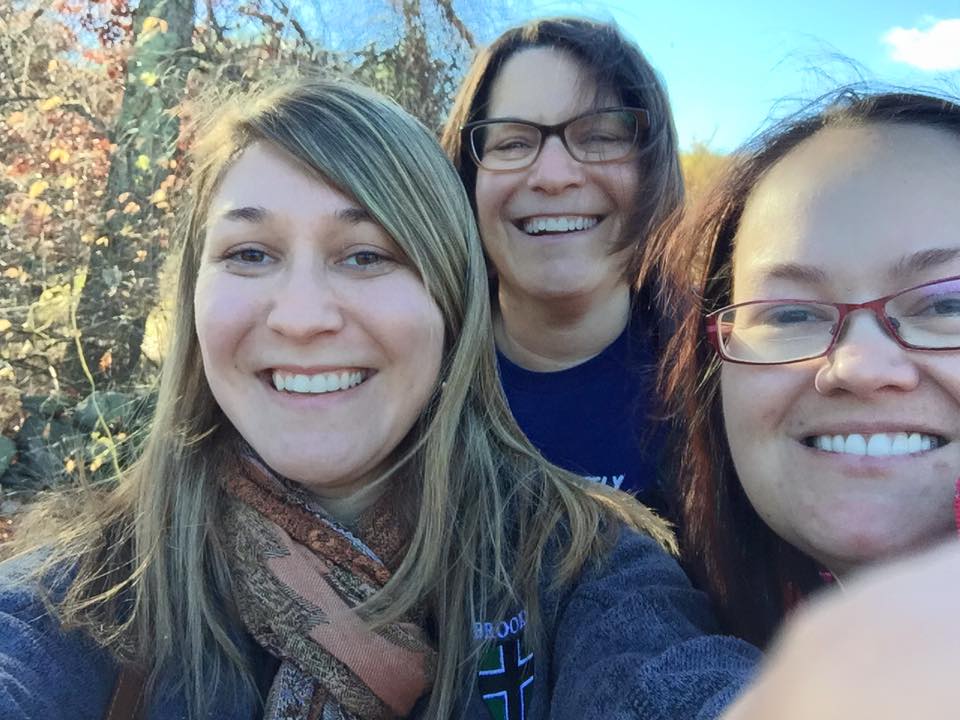
“Ahh!  Dr. Bonnie Feldman’s autoimmune disease workshop already started!  We have to go!” I texted my Stanford Medicine X (#MedX) buddy from Minn-e-so-tah, Britta Bloomquist.

As I hurried upstairs to the correct location, I found Sophie Thacher, a fellow diabetes advocate, and encouraged her to join.

The three of us bustled into the room just as the opening remarks were concluding, and Dr. Feldman, et al. welcomed us heartily.  As I took my seat at the front of the classroom, an easel used for brainstorming ideas crashed down upon my head.

Clearly, we had arrived in comical style…

Britta introduced herself first, describing how she navigated the healthcare delivery system of Minnesota in search of proper diagnosis and treatment.  When the spotlight landed on me, the words tumbled out in a nervous haze.

“I was diagnosed with type 1 diabetes just before my third birthday.  January will mark 25 years since my diagnosis.”

In my mind, time stood still.  My glance met that of a young doctor sitting in the middle of the room, and he seemed like one of those cartoons with thoughts encapsulated in a bubble coming out of his head.

thought bubble3

But you’re so… young, the doctor thought.*

thought bubble2

Yes.  How has a quarter-century of living with this disease gone by already?, I blinked back in reply.*


Frankly, 25 years of diabetes is mind-boggling to me.  To say those words out loud to a room full of people who “got it” was a moment that redefined my relationship with my disease.

You’re still here.  Do something with that gift.  

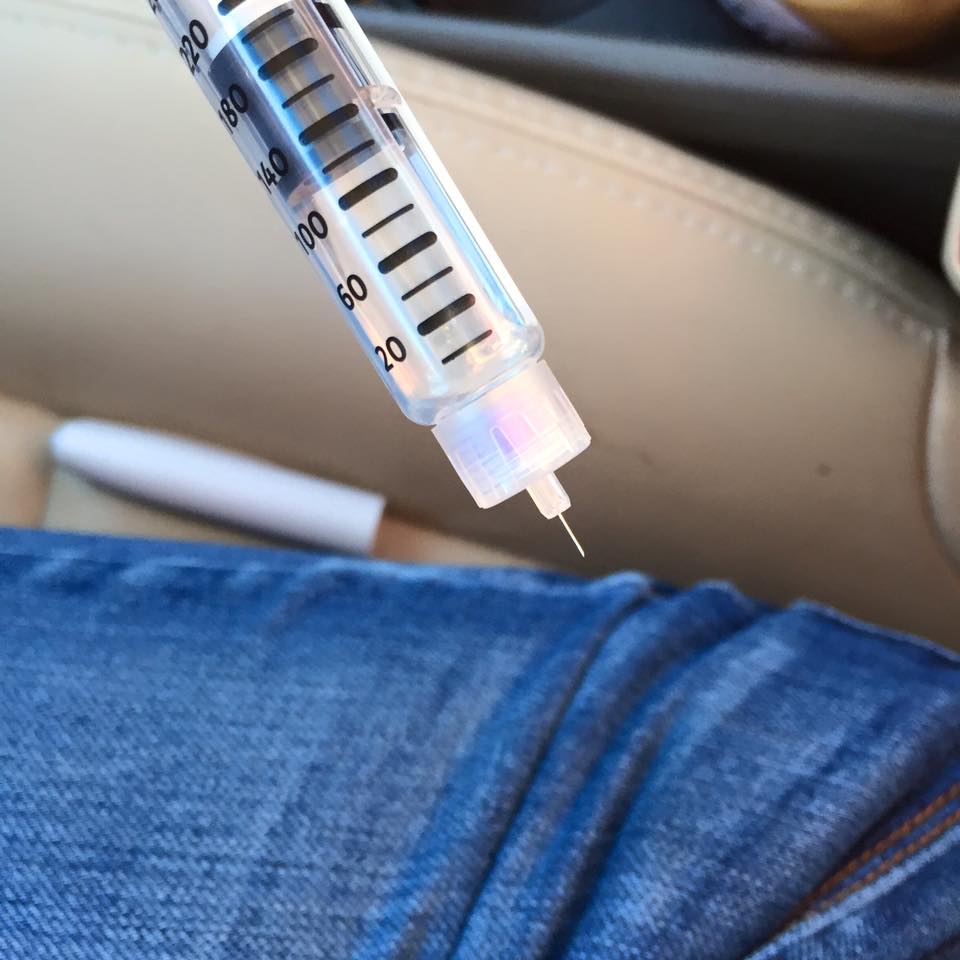
Yes, I am young.  Yet my body has been poked by over 202,000 needles since my diagnosis.  Diabetes has been there for every major life event: birthdays, senior prom, academic graduation ceremonies, and more.

At times, diabetes has kicked and screamed and thrown punches at the most inconvenient moments.  I have shed my fair share of tears hidden in bathroom stalls and parking lots.

My 25th diaversary thoughts are an emotional teeter-totter.  I feel empowered by wonderful patient communities; lucky to have somehow escaped diabetes’ truly abusive potential thus far; thankful for family, friends, and healthcare team members who loyally support my fight; disappointed that with all the braniacs in the world, the diabetes code has still not been cracked; not surprised because the one unspoken truth about diabetes is that it is a #JerkFace; yet hopeful that my future children and grandchildren will not have to know what this jumble of emotions feels like, because we are that much closer to cracking the diabetes code than we were 25 years ago.

What I most admire about diabetics is our willingness to exceed diabetes’ persistence.  If diabetes is not going anywhere in a hurry, neither are we.

Life with diabetes is one big run-on sentence, after all.  Every. single. morning. we wake up and face our reality.  We scramble eggs and put on clean clothes and go to school or work, all after making life-sustaining treatment decisions and prodding our skin with needles and somehow maintaining the faith that a better day will eventually arrive.  That is all we can really ask of ourselves- to keep the faith. 

To see 25 is a poignant reminder of the many lives touched by this disease.  My heart breaks for those who never got the chance to reach this milestone.  I know that they are in a better place; heaven doesn’t care about silly things like basal rates or pre-boluses.  But I still hurt for their families and friends, for the joyous spirits prematurely taken from this world.

On the day of my diagnosis, I was rushed to the Emergency Room with a blood sugar value of over 900 mg/dL after my mother recognized some of the symptoms of type 1 diabetes and brought me to a local lab to test one drop of blood.  The doctors and nurses were frantic to save me.  The previous day, another child- about the same age as me- passed away at that very hospital; his type 1 diabetes had not been diagnosed and treated in time.

I do not know that little boy’s name.  I do not know his family, or who he would have become.  But this 25th diaversary reflection is just as much about his story as it is about mine. 

*****

When I was a child, my father occasionally climbed into bed with me in the morning.  He would prick my finger to check my blood sugar, squeeze the blood onto the test strip, and determine the proper insulin doses.

He would also hug me tightly, whispering, “If Mommy and I could take diabetes from you and instead have it ourselves, we would do that in a heartbeat.  One day soon there will be a cure.  We will eat whatever we want and never have to worry about insulin again.”

My back turned to him, I discreetly wiped away tears until he left the room.

The cure may be 25 years tardy as far as my family and I are concerned, but what is most important is that it eventually gets here.  If the cure does not arrive in time for me and you, then we have to at least scatter the trail of breadcrumbs for those who will come after us.  Our diabetes legacy is not so much about the individual A1c results, but more about how we make the world better before we leave.

Until diabetes is a thing of the past, I will always be that little girl, blinking back tears in an act of strength, praying for the cure.

Here’s to 25.


*Cartoon thought bubbles source: Microsoft Office clip art

**Facebook has deactivated my personal account because apparently they forgot to have an extra cup of very light, no sugar coffee last week.  (Facebook’s overly-dramatic names policy is not in favor of the nickname on my account.  #LameBook)  In the meantime, please follow my Facebook fan page here and share with your friends.  Thanks!

Livin’ Lyfe with Diabetes

Today I am thankful to the good folks at Lyfebulb for featuring my diabetes Lyfestory, which can be found by clicking the link here.

Over the past few weeks, I have admittedly been a bit burnt out diabetes-wise.  Writing my guest blog for Lyfebulb was refreshing, particularly in recognizing the strength that diabetics so often tap to deal with whatever diabetes throws at them while living “lyfe.”

Many thanks are in order for all of the support that Lyfebulb brings to the diabetes world through their work.


PS- On a cute note, my Dad saw the link to the Lyfebulb post when a friend of mine shared it to Facebook.  He printed it out and is eagerly sharing with family members now.  I guess the #doc has that effect.  😉

PPS- Here is a non-diabetes-related picture from my newfound hobby of college basketball.  It is also a shout out to two of my favorite people.  #gofriars

Go Friars

Milestones.

This week will be my final class before graduating with my Master’s degree at the end of December.  The saying about a weight being lifted is true.  As I handed in my final paper last week and my classmates hoorayed, happy to see one of their own crossing the finish line, I instantly felt relief.

Unless you live under a #doc Twitter rock, you know that I was on an emotional rollercoaster last week.  I second-guessed whether I would get my final paper done in time.  Mostly, though, that doubt was due to the anxiety of moving forward in life, of leaving behind the structure, love, and discipline that grad school has blessed me with over the past two years.

As much as I have complained about homework on the weekends, truth be told, I will miss the academic environment very much.  There is a definable purpose there, a working towards something greater than oneself, a joy of learning amongst peers and professors who are just as passionate about healthcare and making the world a better place.

Grad school becomes a part of one’s identity, and I am scared out of my mind to not cling to that role soon.  My go-to introduction spiel at cocktail parties has been, “I’m Ally.  I work fulltime at _____ and I go to grad school at night at _____ and have I mentioned how freakin’ busy I am all the darn time?!!”  As fulfilling as these different components of my life are, it is now time to put what I have learned to good use and to explore new opportunities- after taking a much-needed vacation.

My identity as a graduate student may be shifting, but I do not necessarily have to be lost.  Perhaps I have already been found, and that is what is so scary- those moments of truth where you reconcile who you are, with who you have been, with who you want to be.

Complicating such notions is the fact that today marks my one year shot-o-versary, or the anniversary of returning to a multiple daily injections regimen after a decade of insulin pumping.  I have beaten a dead horse over this, but in case you are new to Very Light, No Sugar: Insulin pumps are great.  Sadly, I experienced product defects with mine and watched my health slowly slip away as a result.  The pros of using injections for me, personally, outweighed the cons, so here I am.  Do what works for you.

My current apathy about the shots milestone surprises me.  In many ways I expected to be just as proud about the shots as I am about my impending Master’s.  But I’m just… not.  Shots are my new normal.  Some day that may change (diabetes cure, please!), but for now, this is what I am working with.

And to be honest, I think that apathy is a good thing.  It means that I have made peace with some of the previous bitterness, that I have chosen to chalk up the pump company’s ignoring of my email pleas as being due to an overloaded pump rep.’s inbox, even though I know in my heart that was never the case.

I now experience the freedom of insulin getting into my body every time I inject, and those #JerkFaces also known as ketones do not hang around much anymore.  I have proven to myself that I am stronger than I ever believed, and that it is good that we have many options in our diabetes management tool boxes.

Every day, I have access to life-sustaining medication, something I will never take for granted again.  Others are not as fortunate, and I am attuned to their suffering because my faulty insulin pump taught me what it feels like to lack insulin.  It is a brutal, desperate torment.  Only insulin can fix it.  And while I feel blessed to have escaped my insulin-delivery mishaps, I will always remember and pledge to help those who do not have access to insulin.

I recall emailing my doctors a week into our shots trial and implying, “Hey, I tried.  Time to call it quits and return to the pump?”  And I remember my dismay at their gentle urging to stick it out one more week, one more month.

Today- one more year- I am happy that I listened.  The difficult days are still here.  But the good days are back, too.  Any day not spent battling ketones on the couch is a day that I must be thankful for, and I am.  I just need to work on expressing that more often.

So here it goes:

I am thankful to have enjoyed the opportunity of receiving a graduate-level education.  During the days of my insulin pump saga, when the ketones were syrupy-thick in my blood and the couch was my home, grad school was the bright light that I could focus on.  I read and read and read and repeatedly told myself that one day I would feel better and have my degree.

Today, I am happy to be here to see that internal mantra come to fruition.  Thank you to everyone who has rooted for me along the way.  My gratitude is best expressed by leaving you with the prayer said on my long drive to Boston before difficult medical appointments:

“In every circumstance and in all things

I have learned the secret of being well fed

and of going hungry,

of living in abundance and of being in need.

I can do all things in Him who strengthens me.

Still, it was kind of you to share in my distress.”

-Phillipians 4:12-14


World Diabetes Day: What I Want You To Know

“What’s that blue circle on your Facebook picture?” is always a loaded question.

006

Firstly, as the international symbol of diabetes, the blue circle is like the communal social media head nod which symbolizes, “I get it,” to others like us who encounter the image.

Not everyone chooses to flash the blue circle, and that is okay, too. We all cope with this disease in our own ways.

Secondly, let’s be honest. The blue circle magnifies the attractiveness of any picture. It’s an unwritten rule. Blue circle = automatically cool.

Thirdly, there is a tale of strength and perseverance behind every blue circle. The story goes something like this:

When speaking to someone not intimately familiar with diabetes, I want that person to know that diabetes is not anyone’s fault. If you want to blame something, point the finger at rebellious islet cells, environmental factors, viral triggers, genetics, and the perfect storm of other elements. But please, do not blame the human being.

Society preaches the message that diabetes is a disease brought on by poor choices. “You ate too much sugar, so you are to blame for your type 2 diabetes. Just lose weight and you’ll be fine.” Phrases like these are tossed around daily in the movies, in comic strips, and in casual conversation. Yet the reality is that if any type of diabetes were so simple to acquire, the whole world would be diabetic.  

Type 1 diabetes, an autoimmune disease, does not discriminate according to who collected the most Swedish Fish from the birthday party piñatas as a kid. Instead, it strikes us innocently and without fair warning. We have lost children with their whole lives ahead of them this year because our healthcare system failed to identify the warning signs of diabetes in time. Extreme thirst, blurry vision, weight loss, frequent urination, and other symptoms should ring a “diabetes bell” in your mind after reading this. When in doubt, we implore you to play it safe and see a doctor immediately.

There are other types of diabetes, too: gestational diabetes during pregnancy, cystic fibrosis-related diabetes (CFRD), latent autoimmune diabetes of adults (LADA), maturity onset diabetes of the young (MODY), and other offshoots of the disease process.

Allow me to play devil’s advocate for a moment. Although no one singlehandedly causes any form of diabetes, let us pretend that the overly-simplified media theories are correct: Ally eats a cupcake, so Ally deservedly acquires diabetes. I “deserve” to take ten shots a day for the rest of my life. I “deserve” to wake up at 4:23 am with a blood sugar of 52 mg/dL, half the normal value, fighting to live- if I am even lucky enough to wake up before it is too late.

Now, substitute someone you love in place of our fictional Ally character. What if Ally was your sister, your father, your favorite high school Math teacher, your best friend? Can you accept the status quo of a world in which someone you love has to go through all of that to survive each day? Could you handle the emotional burden? Wouldn’t you get upset, too, when the severity of the battle was diminished by a corny joke on a TV show?  Isn’t the pain still there no matter what caused the disease?  Aren’t these people still important to their loved ones?

But, it’s no big deal because fictional friend/sister/father/teacher chose to eat the cupcake, right? (I’m taking my coffee with a heavy dose of sarcasm today.)

When we rationalize away the seriousness of this condition by poking fun of Wilford Brimley commercials, what we are really saying is that this is too much for our society to handle. If we laugh it away, we mistakenly presume that diabetes will not touch our lives at some point. Statistically and scientifically-speaking, that is a losing bet to make.

We must, instead, be brave and face the truth that defines this disease: Diabetes is no one’s fault, it is a profoundly-complex condition which is difficult to tame, and we owe it to ourselves and to future generations to lessen its toll by advancing technology and research.

The blue circle represents any of us and all of us. We have endured thousands of needles in our lifetimes. Diabetes changes its mind every day. Given the same scenario, what works on a Monday may not work on a Tuesday. Insulin sustains life, but each dose is an educated guesstimate. One miscalculation can be deadly.

We do not tell you these details because we want you to have a pity party for us. We can do anything. One of us, Sonia Sotomayor, sits on the Supreme Court of the United States. Others have run marathons, graduated from medical school, or written books. We have an enduring human spirit which rises to the occasion of fighting this disease every morning.

This November 14, when you see a blue circle on World Diabetes Day, do not simply scroll right by it. Pause and look at the faces behind the superimposed shapes. Recognize the human being who is affected by diabetes, who is more than a blue circle can ever truly describe. Marvel at his or her resilience. Perhaps donate your weekly coffee fund money towards a diabetes cure effort. Walk with us. Pray for us.

And the next time you hear, “What’s that blue circle all about?,” respond with a story about one of the strongest people you know- someone you love who lives with diabetes.

Thank you.

BetesOnTap selfie

^ Longtime type 1 diabetics, having fun despite diabetes  ❤

November, Polio, and Diabetes: A Lesson on Keeping the Faith

My grandfather was cured of polio as a child.

One summer day in high school, my friend pulled me aside at a barbecue and innocently asked, “Why does Papa have one skinny leg?”

“Polio,” was the only answer I could give.

His leg is atrophied from the polio, but the bounce in his step overrides the slight lag in his stride.  Life is good.  Family, friends, pasta, and red wine.  What more could an Italian grandpa need?

According to my relatives, Papa was blessed while riding on a parade float during the Feast of the Three Saints.  The polio disappeared after that.  I always thought that Jonas Salk played a hand in his cure, but perhaps I just really like the aspect of vagueness.  That’s where the faith is found, after all.

I will accept nothing less than a diabetes cure in my lifetime.  Plain and simple.  That faith will always be here.  When I am cured, I will hold onto that faith until every individual worldwide who is touched by diabetes receives the same renewed membership at quality of life.

Type 1 diabetes has dwelled in my body for almost 25 years.  It has undeniably left its mark.  Freckled fingertips.  Dexcom rashes.  Bruises galore.  As one friend recently joked, “You might want to leave those details out of your Tinder profile!”  Very true.

Diabetes has permanently affected my life, and yours.  I would be naïve to think that after 25 years, a cure will eradicate all of those diabetes handprints.  It won’t.  Some of the damage is already done.  But curing diabetes is also not all about me.  If I am going to be on this earth as a diabetic, if I have endured this crap for 25 years, if I know darn well how unrelenting some days are- then I cannot sit back and be okay with this in the 21st century.

We have the scientific brilliance to cure this disease.  We have the technology to cure diabetes.  And we most certainly have the motivation by which to accelerate research.  Look no further than any diabetes blog or heartfelt Facebook post by a D parent whose child just wants to eat cupcakes like the rest of the class, with no needles involved in the process.  Curing diabetes will involve faith, fundraising, advocating, and destigmatizing.  The #doc is well-suited to do this job.

It is 2015.  It’s about darn time for a cure.  I am excited about the pending technological options which will tide us over in the interim, but ultimately we need a cure.  If not for us in the here and now, then for all of the generations which will come after us.  It is our moral obligation to change this status quo.

November- diabetes awareness month- is about keeping the faith.  If my grandfather and his family had not believed that his polio would be cured- by whatever means- he may not have lived long enough to walk around the world free of leg braces, or to marry his high school sweetheart, or to still be madly in love so many years later.  He needed a cure, too.  He kept the faith, and he got the cure.

Keep the faith.  Advocate long and hard this month, and always.  #weneedacure

The Barter Games

Diabetes is kind of like betting on the horse with the most eccentric name at the Preakness.  I have a good feeling about that newbie, Langerhans, this year!  Make sure you bolus for Seabiscuit!

We’re placing wagers on our health with each best “guestimate” insulin dose that we take.  Every. day. until. we. are. cured.

“I’d rather hold a spider in the palm of my hand than take ___ units of insulin!” I proclaimed to my doctor recently.  Have I mentioned that spiders are THE. WORST.?

I barter with myself, too.  Take one more bite of the sandwich, Ally, and then shoot that Humalog into your stomach.  Too sore today?  Okay, which arm is the least bruised? 

Take the damn insulin!!!  Wait- is the sandwich 35 carbs, or 43.376?  Bolus half a unit more?  Oh, look, a butterfly!

IF you just go to the Endo and get the blood drawn now, THEN you will at least have answers- a springboard from which to make a treatment plan.  IF you do not go, THEN you will lack the guidance on where to begin.  GO. GO. GO.

My favorite teacher from high school lost her (adult) son in a tragic accident.  The pain was still raw many years later when I met her, and her writing took that pain and beautifully chronicled the human side of grief.  She once waded into the ocean and begged God to take her life instead, crawling back to the shore only when it became obvious that it was not her time to go.

“Take me instead of him.”  Either / or.  If / then.  Decisions, decisions.

If you do not replace the wonky CGM sensor before class, then you will have to go without that data for the next few hours.

I promise I’ll be good this week.  I’ll be brave when I bolus.  Just please don’t make this insertion hurt like the last time.

Eyes closed, driver’s seat, grocery store parking lot before grad class.

Please don’t hurt, please don’t hurt, please don’t hurt, please don’t hurt. 

Sensor is in.

It hurt.

My classmates have no idea why I was 3 minutes late.

If they ask, I’ll make them bet on the answer.

The Liars’ Club, Catholic Grammar School Vignette Edition.

“You write like a chicken!  The nuns didn’t teach you any better than that?”  one of my many “Work Moms” asked.

In my defense, I should’ve been a lefty.  But I did get off easy with the nuns of Catholic “grammar” school compared to my Work Moms’ tales of the ruler cracking their knuckles for poor penmanship.

In “grammar” school, they taught us grammar.  My math, science, and arts skills are lacking to this day.

Reflecting on our Catholic grade school lessons recently, I confessed to one Work Mom that I was, in fact, a member of the first grade Liars’ Club.  Granted, I’m no Mary Karr, although that would be pretty darn cool.

It was Christmastime, and we celebrated with the appropriate holiday page in our first grade coloring books.  The scene was that of a Christmas tree decorated with big, shiny ornaments and a gold star on top.

“Are you done?” Sister Catherine* asked.

*Name changed because I still fear her wrath to this day.

The body of the tree had yet to be filled in with the evergreen colored pencil.  But I’m done coloring the ornaments, I thought.

“Yes!” I replied.

Sister Catherine’s eyes widened in fury.

“Liar!” she screamed.

You didn’t let me finish, I thought.

“God doesn’t like liars!  Shame on you!” she continued.

I blinked back tears and repeated my internal mantra, Do. not. cry.  I had simply misunderstood her.  In hindsight, I suspect that my blood sugar was low.  The fuzzy feeling where it all makes sense in your own head, but makes-no-sense-in-anyone-else’s-head-and-you-know-it, was definitely present.

This week, decades removed from the grammar school incident, I found myself in a similar predicament.  Words made sense in my head, but I needed to get them out into the air in order to breathe easier.

I took a sip of my iced coffee, exhaled, and looked my endocrinologist in the eye.  Do. not. lie.  And Do. not. cry. while you’re at it, I reminded myself.

“I don’t eat enough carbs.  I’m way better than I used to be, but I need more.  That’s part of the ketones problem,” I admitted.

Endo didn’t call me a liar.  She didn’t bristle at the words that made sense in my head, and now made sense out in the open, too.  Instead, she nodded and we immediately jumped into troubleshooting mode, discussing target carb-consumption goals and more.

I don’t eat enough carbs because my blood sugars do better on a low-carb regimen.  But perhaps I have veered too low-carb at times, so my body burns fat for fuel.  Hence, ketones.  Hence, dangerous.  Hence, this problem must be solved so I can live a full, enjoyable, healthy life. 

I also don’t eat enough carbs because I just plain couldn’t trust my defective insulin pump products to deliver the insulin to cover those carbs in the past.  Anxiety.  Mentally, it was easier to go low-carb than to deal with the sky-high values when the pump failed as often as it did.  This snowballed into a sticky situation, the residuals of which I am still trying to shake free from my mind.  Just because I am injecting insulin now does not necessarily mean that my brain feels any differently about carbs or insulin.  Only time, prayer, and hard work will tell.

^ All of this was understood and accepted, a starting point of honesty from which to move forward.

“Do you still talk to Dr. X?” Endo asked.

“Yes,” I replied.

A few days later, I went to see Dr. X.   I wasn’t happy with what I had to tell her about carbs- that this was a bigger issue than I had perhaps thought that it was.

But I didn’t lie.

***

“The truth will set you free.” -John 8:32

A 1 c.

My A1c was lower at my recent endo appointment.  Not by any earthshattering amount (and we still have a long way to go), but “lower” is enough for me right now.  In fact, my recent A1c was lower on a shots regimen than it had sometimes been while using an insulin pump.

I thought I’d write some overly-emotional, 2000-word essay on how much the lower A1c means to me being back on shots.  Instead, I’ll take my lack of wordiness as being one step closer to making peace with what happened to me and as a reminder to continue to advocate for others who need insulin.

Frankly, I am still bitter about how much I suffered due to defective insulin pump products.  A few tech glitches per year are understandable, as tech does not equate to properly-functioning islet cells by any means, nor should it pretend to do so.  But to have bi-weekly episodes of near-DKA due to tech issues is inexcusable.  It breaks my heart to think of other people out there who may be going through what I went through, who simply want someone to believe them and to make it all better.

Thankfully, through the support of the #doc and some topnotch doctors and nurses, I am still here, I feel alive again, and I am getting into a better diabetes groove on multiple daily injections.  The bruises are a visible reminder that diabetes does not go away no matter which treatment one pursues, but for me they are a small price to pay for the assurance that insulin gets into my body every day.

I’ve said it before and I’ll say it again: do what works for you, whether that be insulin pumping or injecting or artificial pancreas-ing or Afrezza-inhaling.  I just want all of us to feel good every day.  But I also want those who experience tech problems to know that they are not crazy or “bad” diabetics.  We are human beings; technology is technology; and, ultimately, #weneedacure. 

But what about the people who don’t have a plethora of options?  Having spent many days in bed with ketones when my insulin pump malfunctioned, I often find my thoughts traveling to Spare a Rose nowadays.  I will never take insulin for granted again.  When insulin was not getting into my body, I was like a fish out of water, slowly and painfully fading away.  Kids without insulin suffer like that each day.

We must work hard to improve their access to life-sustaining insulin. 

Diabetes is difficult enough to tame with insulin, never mind without it. 

The Dunkin’ Donuts Vignette

“I’ll take a small hot coffee, very light, no sugar,” my father said to the bored high school aged employee.

“And a lemon donut, too,” he almost whispered, hoping my four-year-old, newly-diagnosed-with-type-one-diabetes self would not notice the snack he was sneaking home.

“You want a plain donut?” he squatted down to ask.

With wide eyes, I scanned the row of baked goods in front of us.  Jelly, strawberry frosted, sprinkles- all of the things that even my young mind comprehended as off-limits.

“I want a chocolate one,” I said.  No harm in trying.

“No chocolate.  You can have a plain donut, okay?” Dad offered in a tone that feigned the appeal of a donut whose very name was inherently boring.

“I don’t care,” I replied calmly, the first of many times this phrase would be uttered mostly to convince myself that diabetes did not hurt me, but also to protect those who loved me from seeing that it did.

“Ha!  You can have a plain one!” laughed a stocky truck driver in line behind us.

Dad hadn’t heard him.  I buried my face into his leg while he paid for our order.

My lip quivered on the car ride home.

“What’s wrong?” Dad asked.

“A man in there teased me about the plain donut!” I screeched.

“What?!!  Who does he think he is?  You just remember- your Dad is the strongest man in the world.  Nobody will ever mess with you!” my father advised.

I chose to believe Dad over the late-1980s version of what we now call a “diabully.”

And the plain donut wasn’t that bad, either.

IMG_0941-0