Thumbs Up for the New Endo

Transitioning from one endocrinologist to another can be emotional and stressful.  We’ve been over this.

As many people expressed similar anxieties about perhaps having to switch doctors at some point in time when I first blogged about this topic, I wanted to provide a quick update on that front:

Today I met my new endocrinologist, as my former endo relocated far away.  New Endo was kind and understanding.  There were no lectures, which automatically earns her many (sugar-free) brownie points in my book.  We set realistic goals which will help improve quality of life a bit.  (Think along the lines of decreasing basal rates to avoid treating multiple lows in the early morning hours with old Christmas candy stash goodies.  And of course, I renewed my vows to put on my brave face and try to take more insulin each day.)

A lot of this stuff seems so obvious now that I’m writing it down.  But it helps to just speak it out loud to a knowledgeable endo’s ears and to have her input in making adjustments which can have big impacts on my health.

We’re going to get where we want to be in terms of my diabetes management eventually.  It has been a year of SO many big changes, but I am learning that change can be good, especially if you have the right people in your corner helping you to keep on, keepin’ on.

Insulin Angels in Hotel Mini Fridges

Please note: I was asked as a member of the diabetic online community to provide feedback on Insulin Angel and I am happy to do so.  I did not receive compensation in any form for writing this blog post.

Let’s be honest, no one designed hotel mini fridges with the intention of storing insulin at safe temperatures.  I was always under the impression that the original hotel mini fridge engineer wanted just enough tilt when opening the door to rustle a few alcoholic beverages and drive up your bill.

When most people open a hotel mini fridge, their objective is to quench their thirst.  My main concern, however, is just how cold the beverages in the fridge may be- because if the beverages are borderline frozen, well, so is my insulin.  You’ve all heard enough of my griping about ketones to last you a lifetime, so I’ll spare you the story this time around.

Bottom line: We all know that we need insulin to survive.  Insulin that is too hot or too cold compromises the efficacy of the medication, and, therefore, endangers our health.  Forgetting that insulin in the fridge when going out for the day is not highly recommended, either.

Mike Hoskins of Diabetes Mine provided a detailed take on Insulin Angel, a product which will alert users to unsafe insulin temperatures and inadvertent moments of forgetting to carry insulin by utilizing that handy dandy thing called modern day technology.

While I have not personally used the Insulin Angel product yet, I feel comfortable stating why I think this concept has potential:

1. Insulin Angel’s marketing strategy catches my attention because they are reaching out directly to those who their product will help: the diabetic community.  Through crowdfunding, diabetics will drive this idea.  Insulin Angel understands their consumers because they understand life with diabetes.

2. Have I mentioned how I just want a nice cold iced tea from the hotel mini fridge without thinking twice about insulin temperature yet?!

3. Fun activities like going to the beach in the summer should stay carefree.  Let Insulin Angel do the worrying about insulin temperatures for you; you can correct any potential insulin temperature problem early on, rather than suffer the consequences later.

4. This product offers possibilities in a world that is not always diabetes-friendly. 

As an example, diabetes is often considered a medically-disabling condition of military service.  Although we have heard of people with diabetes who are able to remain in service in some capacity, one big reason why the military and diabetes don’t jive well is because of the need for insulin refrigeration; this proves technically-burdensome on deployments.

While I in no way, shape, or form am implying that Insulin Angel’s product will be helpful to allow diabetics to join or stay in the military (nor do I want to start a debate here), the main takeaway in raising the example is this: Previous/current limits on diabetics- whether self-imposed or societally-imposed- may one day be lessened due to this product.

Insulin Angel has the potential to give us another useful tool in our diabetes toolkits.  It eliminates one of the many “I wonder if I’m high because of ______?” factors in that we can cross “unreasonable insulin storage temperatures/forgetting my insulin at home” off that list.

Think of it what you will.  In the meantime, I’m ordering my #SaveHotelMiniFridges bumper sticker.

Weird.

Today was weird.

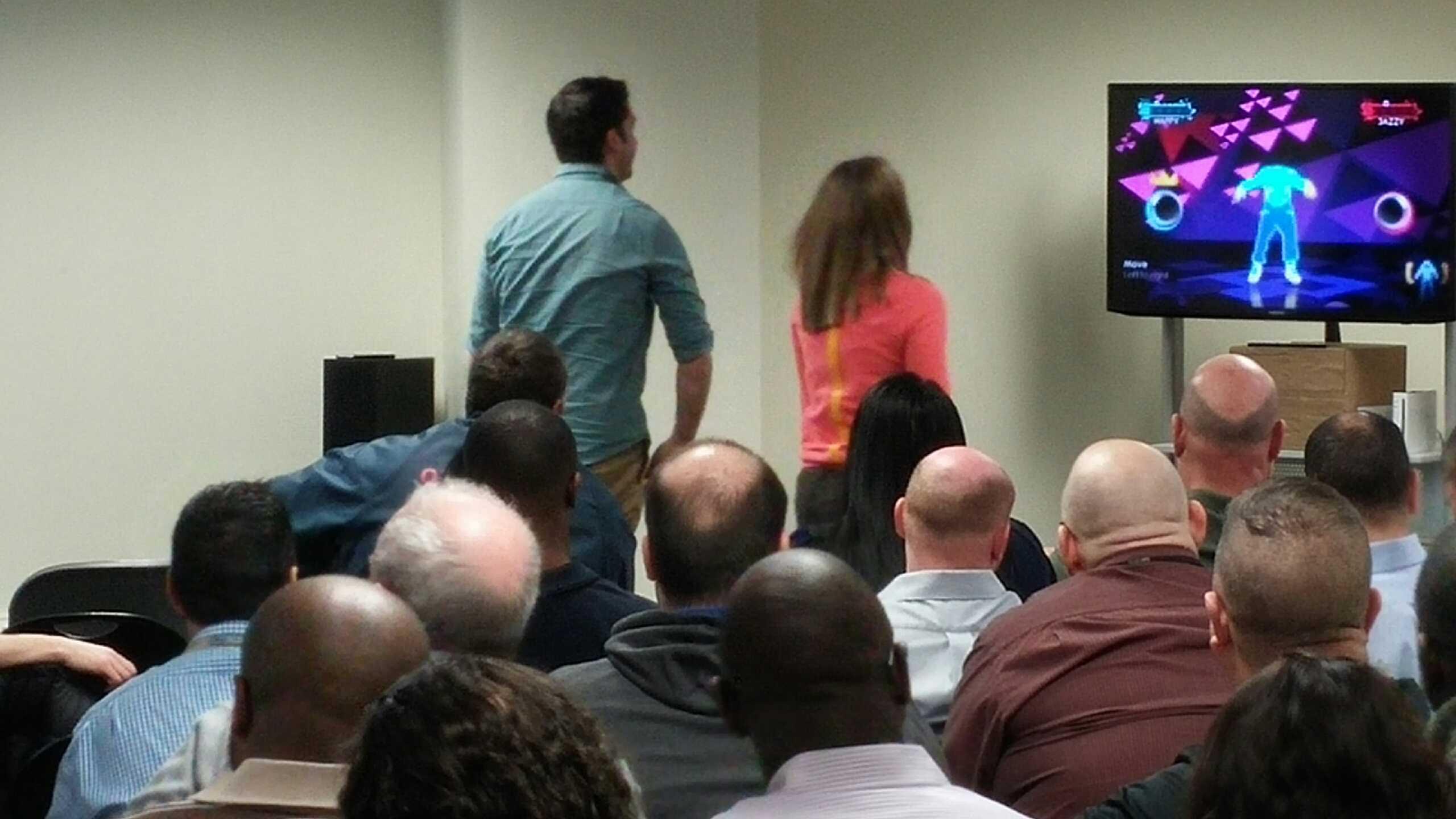
It started off with getting called to the front of a 200-person meeting to participate in Dance Dance Revolution.  My coworker won the dance-off, but now the whole office knows who the real #LeftShark from Katy Perry’s SuperBowl halftime show was.  (That would be yours truly).

006

Later I discovered a 300+ blood glucose reading at lunch and a blood test confirmed some ketones.  Yikes, considering we had another meeting on the way.  No more Dance Dance Revolution for this girl, though!  I felt like this lizard that I encountered on a recent trip to Florida, as in Leave me the heck alone, intruders! [in this case, ketones].

009

I bolused quite a bit and played the “wait it out and let the insulin do its job” game, otherwise known as “patience is a virtue, but it’s really freakin’ difficult when you don’t feel well!”

Trusting in insulin after all of my insulin pump drama in the past has been a challenge for me.  I’m still getting accustomed to the idea that when I bolus, insulin generally does something.  Before, it was not always the case.  Today, it did its thing, although I’m still running too high.

Tomorrow we shall try again.  Bring it on.

If Beauty & The Beast participated in #SpareARose…

If you want the emotional side of why I think #SpareARose is such an important advocacy endeavor, please see here.

One more emotional plea for good measure: Ketones suck.  They shouldn’t exist; no one should have to endure that level of discomfort and danger.  Thinking of little kids across the globe suffering ketoacidosis while waiting for life-sustaining insulin that may not get there in time- well, it just gets to me.  It’s not fair.  Even if we can’t remedy their suffering overnight, it is our moral obligation to do what we can here and now to help them.

On the lighter side of things, I’ve been thinking a bit about Disney.  What if Beauty & The Beast had spared a rose?  They would have cut to the chase with living happily-ever-after a lot quicker, and they would have also spared us that annoyingly-catchy Gaston pub crawl song.  (Sorry it’s stuck in your head now).

Since we can’t rewrite a Disney film, let’s spare the rose for them now.  Let’s chase these ketones away from people who do not have the blessings of accessible insulin that many of us have each day.  We know how hard diabetes can be, even with various sophisticated tools of the trade available to many of us.  Imagine not even having the bare minimum in treating diabetes.  In 5 seconds with a few clicks of a mouse and $5 donated, we can give those less fortunate than us a chance at their own happily-ever-after’s.

Please spare what you can: the cost of your morning cup of coffee, a movie ticket, your favorite type of ice cream.  However you choose to find ways to give, please #SpareARose this February.

Thank you

Hey, that’s mine. And I’m taking it back!

I must confess that I haven’t been in a “very light” mood this week.  It’s a combination of PMS, a pesky chest cold, and the manner in which they catapult my blood glucose to the stratosphere, stuck no matter how many tears I dry or units I bolus.  It’s diabetes at its most vindictive: Ha! Your bazooka-bolus will drop you a whopping TEN mg/dL!  This in turn causes me to feel badly about my irrational BG “failures,” as well as my subsequent grumpiness.  I tried to take a Twitter hiatus as the Catholic grammar school mantra, “If you don’t have anything nice to say, don’t say it,” rang in my ears.  I woke up the next day to a few private messages from well-wishers (thank you- you know who you are), and I realized that instead of hibernating on Twitter perhaps I should open myself up to that support.  After all, it’s the signature of the online communities that I have grown to love.

#BellLetsTalk tweets and blog posts inspired me during my figuratively “extra dark coffee, loaded with sugar” musings.  It is humbling to see that so many people worldwide shared their deeply personal stories during this Canadian mental health effort, and by doing so they inspired others to seek support and to perhaps share their own stories, too.  #BellLetsTalk celebrates these strong, courageous souls.  I could feel the societal stigma lifting as I perused their words, felt their pain as a fellow human being, and admired their strength.

When Sophie- the talented blogger of Writing Possibility whose honesty and eloquence in writing make her one of my favorites in the #doc- invited me to participate in the Take Back What’s Yours campaign, I knew that this was an opportunity to empower myself during a week where diabetes was making me feel especially vulnerable.  Take Back What’s Yours is an effort launched by Chloe’s Concept encouraging readers to take back something good that may have been lost along the way during life’s tribulations, such as a hobby that brought joy or a sense of hope.  If you feel so inclined, please join us in taking back what’s yours.  Let’s celebrate ourselves in the spirit of #BellLetsTalk and #TakeBackWhatsYours.

Here’s what’s mine, and I’m taking it back:

Note: You’ll get the gist of it as you read each paragraph, but in certain circumstances I am “taking back” in the sense of regaining my footing with something I have struggled with.  I am taking it back in that I am conceding that it happened, but I will not allow it to occur anymore if possible.  In other circumstances, I am “taking back” positive things that I have lost sight of recently.  While the hashtag’s meaning may have been slightly altered for purposes of this blog post, I think the theme of #TakeBackWhatsYours is still alive and well here.  This is the best way that I can express the hashtag in terms of my individual trials in life.

1.)  From a point-forward basis, I am taking back the nights that I went to bed hungry as an employed, educated American woman.  I have been blessed enough by my current circumstances in life to be able to put food on the table; now it’s time to enjoy it again.  I do not fit the stereotype of a starving child in a third world country far away from here, but I have been far too familiar with hunger due to the aftermath of faulty insulin pump sites and the fears running rampant in my own mind.  Food is not the enemy.  Insulin is not the bad guy.  And I am fully capable of doing this, no matter how scary it seems.  I will not go to bed hungry any longer.  This means I must make some concessions: bolus larger amounts of insulin before bed; eat when my blood sugar is higher than I would prefer for it to be going into a meal; learn that it is okay to see some slightly-skewed blood sugars during this time of growing; share my story in case someone out there is hungry for the same reasons.

2.)  I am taking back the “set in stone,” predefined amounts of insulin that have so dictated my dosing for many years.  Each day with diabetes is different, and insulin needs to reflect this.  I will be more flexible.  I will email my doctor about the mini-successes.  I will celebrate them.  And I will pledge to keep trying.  If the dose misfires, well, I have enough experience to know how to handle it by now.

3.)  I am taking back feeling guilty about my feelings.  From day one of creating this blog, I promised to be authentic, and I believe that I have been.  Sometimes the #nofilter thing makes me feel like I’m wearing my emotions on my sleeve too much, but I wouldn’t be me if my sleeves weren’t a little dirty.  I am taking back being too hard on myself for a tweet that I perceived as overly-cranky or for fear of annoying others.  We all annoy someone at some point at some time.  If we are in the wrong, we can apologize and move forward.  But if we walk the line of keeping too much to ourselves, we aren’t allowing others in as much as we should be.

4.)  I am taking back my former joys and living in the moment.  I will recognize that I am more than diabetes and health care advocacy.  While these are enormous passions of mine, I also need to take some time for myself to try new things and to chill out with my own thoughts.  Always being on the go and jumping head first into the next project are qualities that have helped me to succeed, but reading a book for pleasure or grabbing a beer after work with friends on a Wednesday night are also ways in which I can obtain happiness.  There doesn’t always have to be a goal: an A1C target, a certain GPA, a defined objective measurement of success.  Instead, there can be some down time to relax, to connect with the people around you, and to be present in life.  It is fine to be hardwired to “busy and productive mode,” but setting aside a few hours a week for other enjoyments is crucial to long-term health and happiness.

5.)  I am taking back my ability to allow others in to help.  As a diabetes-induced defense mechanism, I have handled things on my own for a while now.  When friends try to help, I’m initially willing to talk their ears off about diabetes, but by the end of it, I’m usually saying things I don’t mean to say out of frustration.  The more open I become, the more vulnerable I feel, and the more I can’t seem to come to grips with it.  For the sake of my relationships, this nonsense has to stop.  As much as I want to act tough and invincible, the reality is that there will be times where diabetes has a strong hold over me.  Why not accept the support others are so generously trying to give me, even after I have pushed them away?  These are clearly goodhearted people, and I should be counting my blessings instead of running from them.

Needles: #ItMakesSenseIfYouHaveDiabetes

In the early 1990s when I was in elementary school, I took part in a study through the Joslin Diabetes Center which examined whether or not patients “liked” new, shorter needles on their insulin syringes.  We had to fill out a chart with smiley faces for “minimal pain,” sad faces for “painfulness,” etc.  It’s probably why I remember this: the artistic part was fun.

A creature of habit, I emphatically voiced my displeasure with the new, short needles.  Big sad face for you on the chart, “new thing meant to help me!”

My parents, perplexed that I would elect to use the “behemoth needle model,” decided that it would be in my best interest if they switched out the needles unbeknownst to me.  I believed that I was still using a large needle, when in reality it was a short needle.  Not one to complain much about insulin injections to begin with, I did not notice the difference or care to vocalize it if it was there.

(Sorry to Joslin if we messed up your study!  I believe the switching out of needles was probably done after our part of the study concluded).  Also, #sorryimnotsorry to my parents for still being a little miffed about this.  I’m all about patient autonomy, albeit my parents were simply trying to lessen my diabetes burden at that time.

So, why am I reflecting on this during Snowmaggedon 2015?  Perhaps I have too much free time on my hands today.  But I’m also just plain kind of sore from injections right now.  The skin on my stomach bounces the needle off in protest after ten years of insulin pump sites.  Can I really blame it?  My upper left butt cheek looks like a game of pin-the-tail-on-the-donkey gone wrong, although the right side knows how to handle the infamous “Lantus Burn” like a champion.

003

Needles are the easiest part of diabetes in many regards, but somewhere along the line I have noticed in social media groups that there is this pressing need for some to announce that diabetes never hurts.  Well, for some of us, it does.  And trust me, as a kid I was the first to judge the “insulin shot cry babies.”  Mine was a face of stoicism from a young age.  But as an adult making an effort to accept my emotions more freely, I can admit that sometimes the needle hits a sore spot and a few swear words are mumbled.

What can one do about this- this reality that needles keep you alive whether or not they cause pain?  Running with our theme of doing what works for you, exercise your freedom here.  If you like the bigger needles, use them, and then draw a big smiley face on your chart for good measure!  We have options here, and plenty of them at that rate.

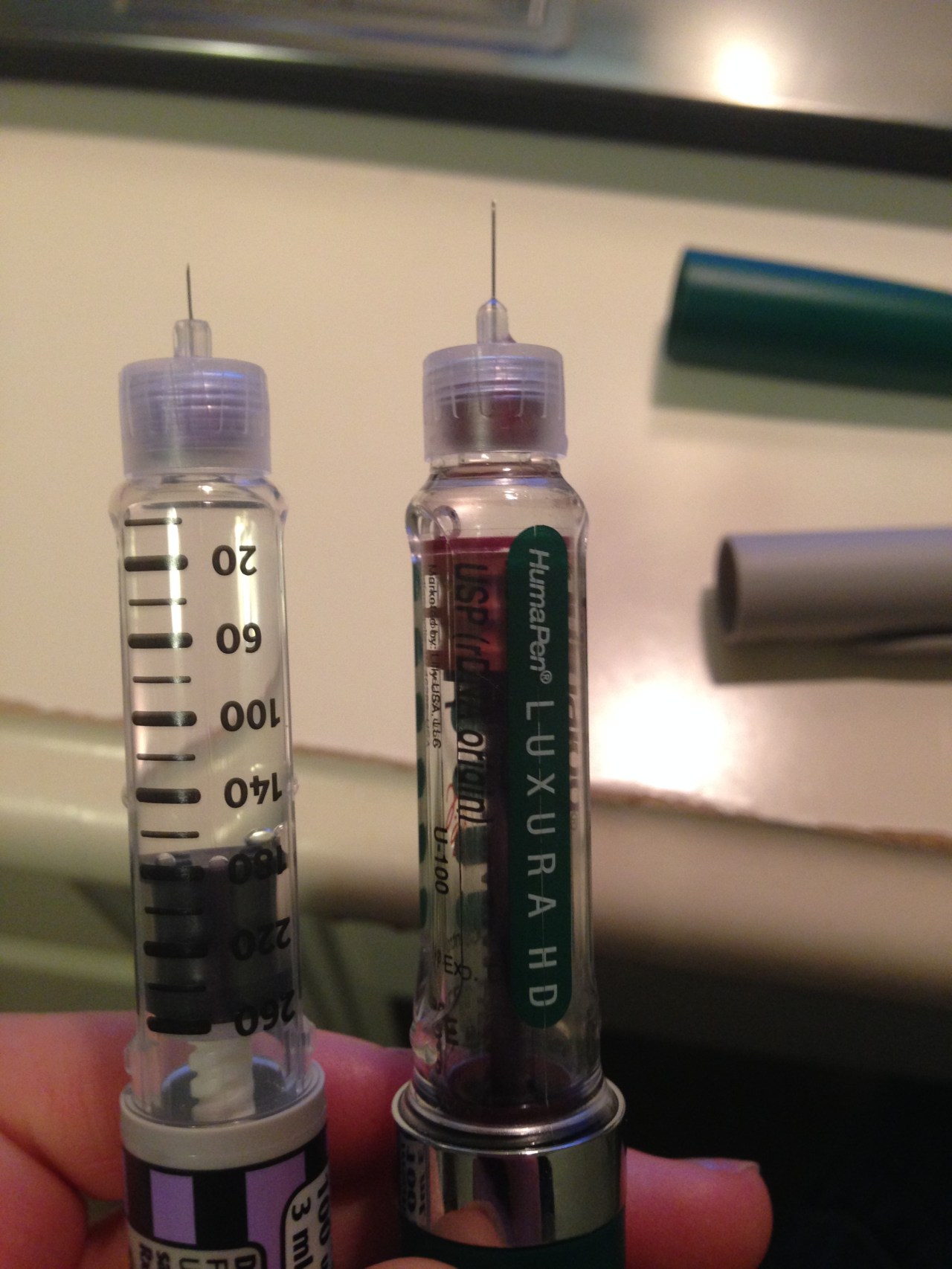
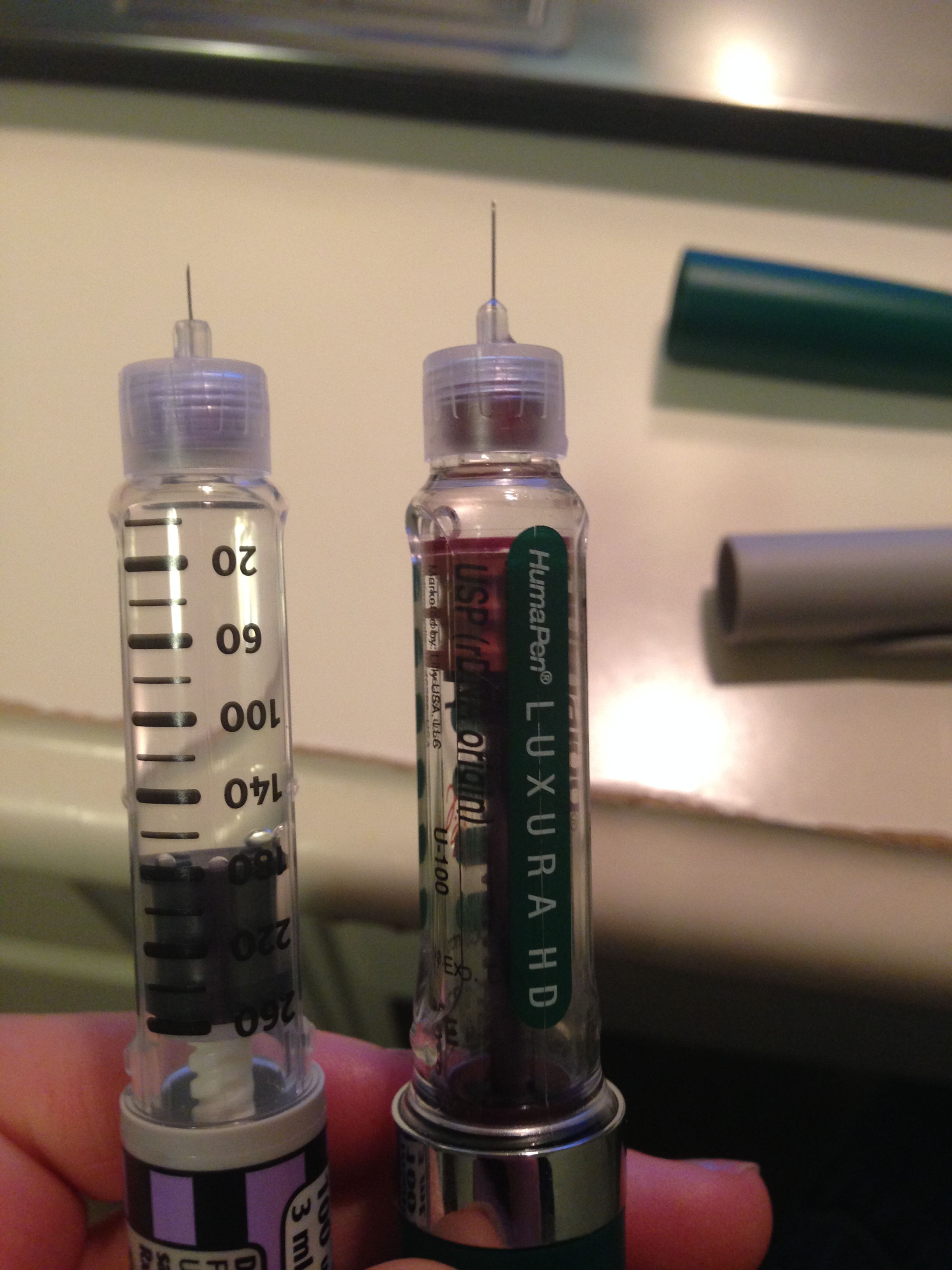
#ItMakesSenseIfYouHaveDiabetes: Perhaps short needles work on some sites using a particular type of insulin, but larger needles work better in different areas with different insulins?  BD Nanos (4 mm) are the tool-of-choice for Lantus injections in my backside, while the BD Short (8 mm) needles work better for Humalog injections in less-padded areas.  Humalog does not pool at the injection site as often with the larger (confusingly named “Short”) needles.  Yet the Shorts with Humalog have the pin-the-tail-on-the-donkey effect on my left side- go figure.  Maybe I will employ Nanos for those sites?  Again, #ItMakesSenseIfYouHaveDiabetes.

005

This is my personal configuration that works well for me, so I’m going to stick with it.  When I need to make alterations, I will do so under my own good intentions.  And, in some weird sort of psychological spin on things, I acknowledge that I am a fan of the same method as I was two decades ago: using a combination of long and short needles to get the job done while maintaining my sense of independence in living with type one diabetes.  Ultimately, it is about how you feel as the individual; however wacky your methods may seem, do what works for you.

***Update: Erin Gilmer over at healthasahumanright.wordpress.com brought up a good point with me via Twitter.  Not everyone has these numerous treatment options due to various obstacles to proper health care: limited insurance coverage, out-of-pocket expenses, socioeconomic status, and so on.  While I am a firm believer in fighting hard for the health care that you want, I must concede that there are certainly limitations to this idea.

I meant to disclose previously that I paid for the 8 mm needles out of pocket.  My insurance had already covered a regular syringe prescription when I first switched back to shots.  Then my doctor and I chose to go with pens out of convenience, so obtaining the Nano pen tips took a lot of jumping through hoops until insurance was kind enough to override my refill a few weeks early.  When it came time to try the Short 8 mm needles after the Nanos weren’t working on my stomach, I purchased a box on my own out of fear of insurance tightening their pocketbook with me.  If I remember correctly, the box of 100 pen tips cost about $45 out of pocket.

I will blog about the health care coverage loop-de-loop at a later time, but wanted to acknowledge Erin’s point here, as I believe this is an important one, too.  Patients can fight for their health, but the health care system needs to give back some of that same effort in order to help us to get well.

Better

“Is your diabetic relative’s diabetes as ‘bad’ as yours?”

It was a fair enough question to ask considering the whole #nofilter hash tag often dictates my social media interactions.  The good, the bad, and the ugly are relayed to my followers, and I make no apologies for that.  This is life with autoimmune disease from my perspective, and if I’m going to share that story, I’m going to keep it real.

The question still kind of hurt, though.  I truly didn’t know my diabetes was considered “bad.”  Sure, my A1C is less-than-stellar.  I was overly-vocal about my insulin pump frustrations, albeit I was fighting for my quality of life.  I look back and see the desperation in my words- those spoken and those written– but I never thought that I was going to lay down and let the diabetes wave roll over me.  I was, and I still am, going to fight this.

A good friend asked the question about 6 weeks ago, slowly articulating the words, immediately wishing she could pull them back in before I could snap.  I said something along the lines of, “I mean, we’ve always more or less had similar results in our diabetes management.  But it’s type one diabetes.  There are ‘good’ and ‘bad’ days even if you’re the ‘best diabetic’ out there, and the ‘best diabetic’ doesn’t exist in real life.”

Then we returned to our beverages and talking about our jobs, and until now I haven’t thought much about that conversation.

The truth of the matter is, 6 weeks and a complete 180 degree turn in diabetes management from insulin pumping to multiple daily injections later, I do indeed feel better.  I’m almost afraid to say it because some kind of a diabetic hex might come out of the woodwork and knock me to the ground again.

My transition back to insulin injections is a bit less bumpy now.  My quality of life has started to see sunlight again.  Little things like eating a ranch chicken sandwich for lunch and sending a picture to my doctor (#yay!), bolusing insulin and knowing that it will do its thing to keep me alive when I eat that sandwich, bowling with friends and watching the exercise work its magic on my CGM graph, and having so much fun that for a few hours the CGM graph doesn’t really matter- these things that a few months ago seemed so far out of reach- are now suddenly part of enjoying life.  It feels so good that I am scared of losing it again.

005                           014

There is an element of “survivor’s guilt” in diabetes for me at times.  I know that I deserve to be healthy and to enjoy my twenties.  I know that feeling better can be fleeting if diabetes has its say in the matter.  But I also know that feeling better is something I so passionately want and have fought for, so I shouldn’t feel guilty or afraid of the betterment, right?  And even if it does eventually fade away, I will do what every diabetic does: lift my head up and find a different way to fight diabetes until I feel better again.

Moral of the blog post: Do what you have to do to feel better.  If that means writing somewhat corny, sentimental blog posts far too often, tweeting in rapid fire to get suggestions on diabetes management, or completely changing your course of treatment- so be it.  If an insulin pump works best for your needs and your health, utilize that technology if you can.  If you want to take a pump vacation, book your flight.  Using whatever floats your diabetes boat, just try your best to keep on floating.  We deserve to feel better.  And take it from someone who has been in the diabetes trenches: we can feel better.

Type 1 Diabetes: Welcome to the 1%. (Rant Version)

This piece was previously bookmarked as a page reference on the blog in order to enlighten those readers who may not know much about type one diabetes.  After “word vomiting” all of my pent up emotions about misconceptions regarding the various types of diabetes, I realized that I needed a simplified, statistical page reference on the blog, and that I should retire the gushy feelings for a blog post.  So, here is the recycled “Rant Version” of the 1% for those of you looking for some diabetic attitude to read with your morning coffee.

In 2012, the population of America was almost 314 million people.  According to the Juvenile Diabetes Research Foundation (JDRF), there are about 3 million type one diabetics in the United States.  Crunching a few numbers illustrates that type one diabetics are a rare breed indeed; we comprise less than one percent of the U.S. population. 

If you are not type 1 diabetic or a close family member or friend to a type one diabetic, you may think that your education from the mainstream media in regards to diabetes is sufficient.  Newsflash: it’s not.  Diabetes is incredibly complex, and many reports and articles, quite frankly, miss the mark when portraying the disease.  I am eagerly working towards a Master of Science in healthcare administration degree, and my studies have included taking public health courses at the graduate level.  While I do not officially have those initials tacked to the end of my name quite yet (I can see it now- Very Light, No Sugar, Master of Science- okay, sorry!), I do know a thing or two about chronic disease due to my education.  I also have 23 years of personal experience as a type one diabetic, and I have a family member with diabetes as well.  In addition, my fulltime job in a healthcare-related field has allowed me to observe other diabetics’ stories.  If that unofficial transcript does not make you trust my judgment in discussing chronic illness, allow me five minutes to explain diabetes in simplified terms for this epic rant of a blog post, please.

Diabetes comes in many shapes and sizes.  It affects the young, the middle aged, and the old; the overweight and the thin; the black, white, purple, green, yellow, blue, and so on.  It places an unjust burden on people who are not only diabetics.  They are also parents, grandparents, grandkids, siblings, daughters, sons, cousins, friends, coworkers, race car drivers, actors, entrepreneurs, advocates, and much more.  Most importantly, they are all human beings who did nothing to “deserve” the amount of suffering that they endure each day as if it were some sort of punishment meted out in a courtroom, with society residing as the judge.

Some women encounter gestational diabetes with pregnancy.  LADA, latent autoimmune diabetes of adults, is similar to type 1 diabetes but with a later onset in life, in layman’s terms.  The diabetes that you often see in the media is type 2 diabetes.  Type 2 diabetes is characterized by insulin resistance and difficulties metabolizing glucose, but the body still produces some insulin.  According to U.S. News, one in eight Americans is diagnosed with type 2 diabetes, and evidence shows that many others go undiagnosed.  Clearly, these figures do not represent 1% of the population, as type 2 diabetes is quite common in our country.

I am type 1 diabetic, not type 2 diabetic; I can only speak from my own perspective.  However, I am going to defend the type 2’s for a moment here.  They get a bad reputation in the media, which critiques them as being overweight and “lazy” about their health.  While lifestyle may play a role in some cases of type 2 diabetes, it is not the only factor.  Genetics, the environment, and many other issues come into play to set the stage for the onset of type 2 diabetes.  The next time you catch yourself blaming a type 2 diabetic for his or her health situation, take a second to realize what you are really doing: rationalizing.

Society is prone to this.  It is easier to blame the rape victim for drinking too much or wearing a short skirt than it is to mentally process that one’s mother or sister could just as likely be that randomly-selected victim.  It is also easier to blame food for type 2 diabetes than it is to admit that we have many barriers to enjoying healthy lives in our society today.  Have you never had a piece of cake in your life?  How about a potato?  Potatoes carry a much larger load of carbohydrates than a half of a cup of ice cream does, for example.  Carbohydrates raise blood sugar.  If diabetes was so cut and dry, as in “Eat too much cake and you will get diabetes,” well, we would all be diabetic.  Give everyone a break, please!

Type 1 diabetes is much more rare, as evidenced by the 1% fact previously discussed.  It is caused by an autoimmune attack on pancreatic islet cells, causing insulin production to short circuit and eventually to stop altogether.  Type 1 diabetes is not caused by ingesting too many cookies.  Research indicates that the “perfect storm” of factors, to include genetic, viral, and environmental components, may be responsible for type 1 diabetes.  No matter the cause, diabetes sucks!  What also sucks is hearing that it is your fault in society’s eyes on a regular basis.  Paula Deen diabetes jokes and the like are thrown in our faces day in and day out.  When you have endured hundreds of thousands of needles to manage a disease that never rests over the majority of your lifetime, it is beyond frustrating to have diabetes minimized by society in such a fashion.

As I stated, my personal experience involves type 1 diabetes, so that is what I will describe here.  The goodness that stems from diabetes is seen in the wonderful people that you meet along the road in your health care management.  The other diabetics in the online community, patients at the diabetes clinics who understand exactly what you go through, doctors and nurses who dry your tears on the bad days, and friends and family who are always willing to lend a hand whenever they can- these are the people with whom diabetes has blessed me and other diabetics; they are the pillars of strength whom we rely on.

But the reality is that no matter how strong our army is right now, diabetes is the monster that never pauses to catch its breath.  Every bite of food consumed can impact a type 1 diabetic’s blood glucose.  Those 5 chips I had at the office party?  Yup, they will impact my blood sugar, sometimes at dangerous levels.  That short walk to my car after a party?  Yup, now my blood sugar is dropping.  Traveling?  Darn, I need to pack an entire suitcase full of medical devices and medication to sustain my life for a few weeks.  If that luggage is stolen at the airport, my life is immediately endangered.

You think that I should “control” my diabetes better?  Every day we wake up fighting a constant battle.  Insulin is not a miracle drug; it is not a “one size fits all” pill.  Insulin dosing for type one diabetics is an educated guess taken subcutaneously each time around.  What works on Monday may completely backfire on Tuesday.  Maybe you have a head cold coming on and your liver is furiously releasing sugar to fight the illness?  Now you may have to triple your insulin dose.  But oh wait, that was too much and now your blood sugar is crashing.  There is no crystal ball that tells us the perfect insulin dose to take at this point in time.  It is a trial and error dosing system.  And once you find something that works, diabetes changes its mind within a few days.

These are the calculations that never go away; they are sometimes minute to minute or hour to hour, and they are definitely day to day.  Until there is a cure I will never put a bite of food in my mouth without thinking over such factors to determine an insulin dose.  This disease is the farthest thing from a joke.  Trust me, we all wish that it were as funny and as manageable as the media makes it out to be.  I wish with every ounce of my soul that a cure would take away this never ending struggle for the parents of kids with type one diabetes, for the non-diabetic siblings who do not receive as much attention as their diabetic counterparts, for the toddler screaming in pain at injection time, for the young adults struggling to keep brave faces while showing up to work every day to deal with the normal stressors of life on top of the diabetes headaches.

Please, please take a moment to educate yourselves about diabetes and to share this knowledge with others.  Until we change our mentality about diabetes in this country, diabetes will continue to plague us, to take loved ones from us, and to be a mental and physical burden for so many people who do not deserve it.  The good news is that it is within our power to change this public perception.  It starts with each and every one of us.  Let’s get to work.

Thank you

Sources:

http://health.usnews.com/health-news/news/articles/2013/02/20/1-in-8-americans-diagnosed-with-type-2-diabetes-poll

http://jdrf.org/about-jdrf/fact-sheets/type-1-diabetes-facts/

http://www.mayoclinic.org/diseases-conditions/type-1-diabetes/basics/definition/con-20019573

http://www.mayoclinic.org/diseases-conditions/type-2-diabetes/basics/definition/con-20031902

True Life: I’m afraid of spiders and insulin, in that order.

Without fail, every summer night when I go outside to get in my car, a few yellow spiders are hanging out on the hood and roof.  When I approach, they look at me as if I am interrupting their block party.  After catapulting myself into the driver’s seat a la Angelina Jolie in Tomb Raider, I give myself the “spider pep talk.”

“Ally, you are better than this.  It’s one moment in time.  Try to forget about them and get on with your life.”

If only the “take your insulin” pep talk was that easy…

Every type 1 diabetic understands the rocky relationship that we entertain with insulin.  We can’t live without it, but sometimes living with it makes the act of living really, really difficult.  Like the times when it almost kills us at 3:34 am with a blood glucose reading of 45 mg/dL when we inadvertently over-calculate the spike effect of pizza for dinner by bolusing heavily.  Or the times when we hit a bad pump site at insertion and the cannula kinks and suddenly we want to drink water out of a fire hydrant like dogs do in 1960s cartoons.  Those times, and any other times that insulin doesn’t work perfectly.  Which is almost every time.  Because. insulin. does. not. replace. a. normally. functioning. pancreas!!!!  As we have all heard many times before, insulin sustains life, but it is not a cure for diabetes.

I will delve further into my own struggles with insulin as we progress in our blogger-bloggee courtship, but for now just know this: I sincerely appreciate the discovery of insulin and how much diabetes technology has changed over the course of my 23 out of 26 years of life spent as a type 1 diabetic.  Every time I go to Joslin Diabetes Center in Boston, I look at the murals on the walls in the lower level of the building which depict some of the history of insulin, and I am so thankful to be a diabetic “now” as opposed to “then.”  But I also fear and respect this life-saving commodity for the abusive lover that it sometimes is to all of us.  I have a tendency to “under-bolus” because of the trauma that over-bolusing has caused in the past.  Whew- the hardest step is admitting that you have a problem, right?

We are stuck in an ongoing oxymoron of sorts.  We can’t take too little insulin or our sugar will be high; we can’t take too much insulin or our sugar will be low.  And many of us grew up with the dreaded lecture from (insert whoever is applicable for you) ____________ (doctor, parent, school nurse, etc.) if we did not perform flawless algebra to compute the correct “insulin to carb to exercise to stress to illness to social life” ratios every time we took insulin.

But you know what?  Once I admitted that the problem was there, a doctor looked me in the eye and told me that it was okay.  Hers was not a lecture of blame.  She told me that I could forgive myself, that I did not have to spend the rest of my days in self-imposed “diabetic timeout.”  She told me that it was normal to be frustrated, that trying to play the role of a perfect pancreas every day was “not a good look” because it was essentially bullying myself, giving myself that loathsome lecture that I never really deserved in the first place.  But why give yourself that negative commentary when you fully understand that diabetes is not so cut and dry?  You are not an outsider to the disease, so do not treat yourself like you are.

I understand that I have the tools to do this, to improve and maintain my health. Not carrying “survivor’s guilt” of sorts is difficult for all of us who put in 110% effort every day only to have diabetes knock us on our asses with a herculean effort when we least expect it.  What truly matters is that we have already entered the boxing ring.  We have given ourselves the “insulin pep talk.”  We have calculated the carbs in the 5 crackers that we snacked on and pressed a few buttons on our insulin pumps to account for them.  And if we forgot to do so, or if we mistakenly took half a unit of Humalog less than what we should have taken to achieve an ideal blood sugar goal, so be it.  We have tomorrow, and the next day, and the next day.

And we keep showing up at the boxing ring ready for a fight, which is more than most people can say…

Coffee helps diabetic eyesight? Count me in.

According to the Journal of Agricultural and Food Chemistry, drinking coffee may help protect diabetic eyes from retinopathy.  See the article here: http://www.battlediabetes.com/news/diet-and-nutrition/coffee-could-prevent-retinal-damange-in-people-with-diabetes.

And how do we take our coffee, everyone?  Oh, that’s right- very light, no sugar.  😉